William Lithgow was a Scottish traveller who claimed to have walked some 36,000 miles in nineteen years, through Europe, the Ottoman lands, Egypt and the Holy Land. The figure is his own claim. In 1620 his journey through Spain ended in a prison at Malaga, and the account of what followed is one of the most detailed first-hand descriptions of torture to survive from the period. Nearly all of it comes from Lithgow himself, in the book he published in 1632, so the account below keeps to what he says and flags the numbers as his.
The Horror
Lithgow was born in Lanark around 1582. A family tradition says that he was caught with a young woman called Miss Lockhart and that her brothers cut off his ears, earning him the name “lugless Willie”. The story is tradition and is unconfirmed.
In 1620 he was in Spain on the last of his three great journeys, intending to go on to Egypt and Ethiopia. He reached Malaga, where an English fleet had arrived on October 27, 1620 after an expedition against the Algerian pirates. According to Lithgow, as he walked through the town nine sergeants seized him, wrapped him in a black cloak and took him to the governor’s house. The governor accused him of being a spy who had been gathering intelligence for the English fleet. He denied it. His papers, including letters from King James dated 1619, were not accepted, his money was taken, and he was held in the governor’s palace in a dungeon, with the governor keeping his imprisonment secret from the townspeople.
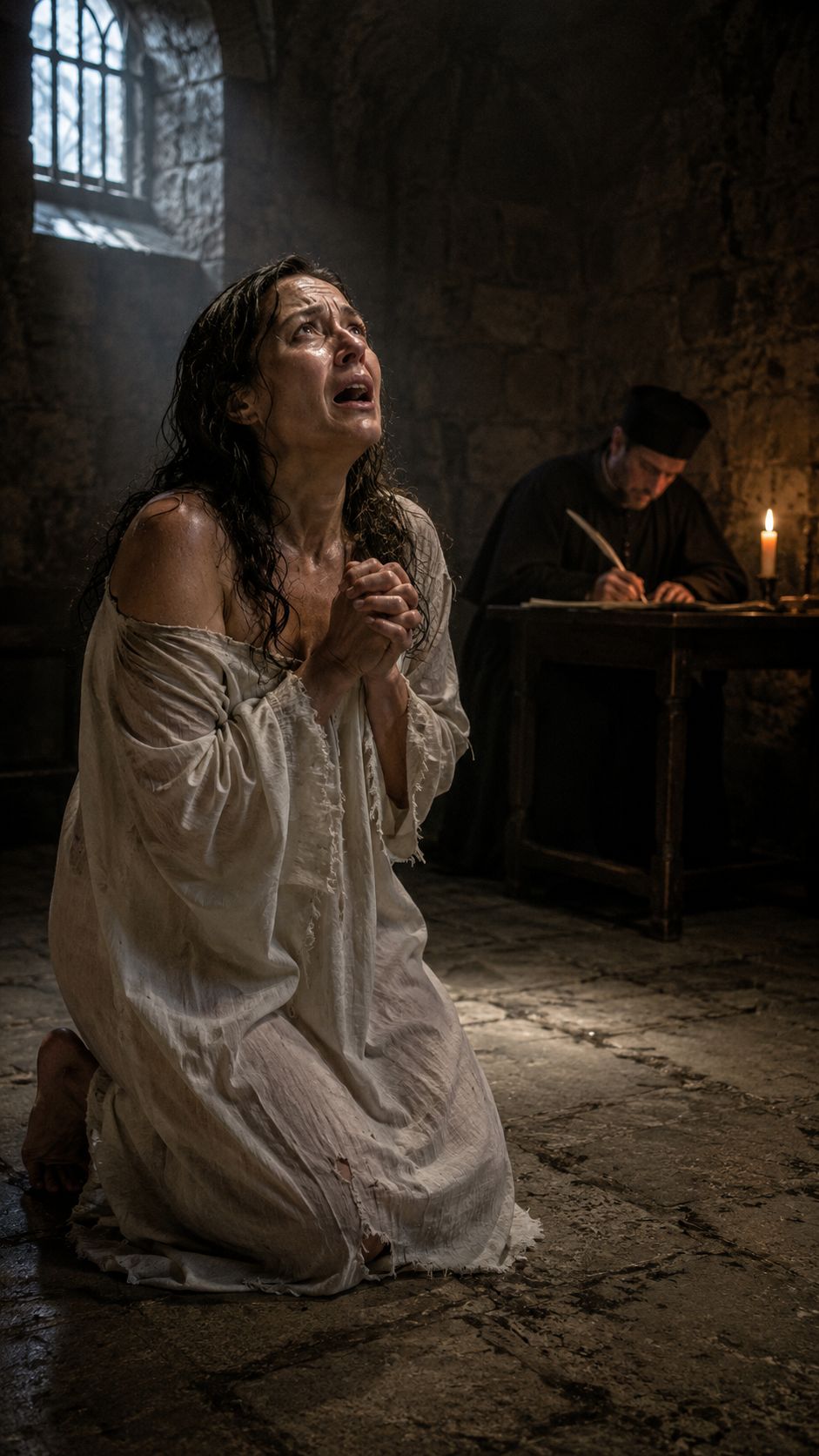
On the forty-seventh day of his imprisonment, five days before Christmas, he was taken at two in the morning by coach to a house among vineyards, where a rack was set up. He describes a three-planked frame on which he was bound with his head lower than his body and the cords tightened. By his own count he suffered sixty-seven torments over six hours. When he was taken off the rack, he says, water poured from his mouth, and he fell twice into a swoon. He says his arms and legs were crushed and that his left arm was never cured. The editors of the 1906 edition record that his left arm and crushed bones remained incurable.
The case then turned from espionage to religion. Lithgow says the governor handed him to the Inquisition so as to cover his own mistake about the English fleet. After a series of visits from priests and Jesuits, who urged him to convert, the Inquisition, by his account, condemned him to burn after Easter at Granada. Before that, he says, he was given a second ordeal in his dungeon: his teeth were forced apart with an iron gag, his belly was filled with water, a garter was tied round his throat, and he was rolled about the room and then hoisted by cords tied to his great toes until he lost consciousness. He refused to convert.
His release came by accident. About a fortnight before Easter 1621, the governor told the story over supper to a gentleman visitor from Granada. The visitor’s Flemish servant was horrified and went to the chief English consul at Malaga, Richard Wilds, who with other English merchants wrote to the ambassador at Madrid, Sir Walter Aston. A warrant came from the Spanish court and Lithgow was released late on Easter Saturday. Ships of the English navy under Sir Robert Maunsell, which were in Malaga Roads, took him on board. He reached Dartford fifty days after leaving Malaga and was carried to the court at Theobalds, where, he says, the whole court saw what a “martyrd anatomy” he had become.
The Modern Relic
The relic is the book. The Totall Discourse of the Rare Adventures and Painefull Peregrinations of long Nineteene Yeares Travayles, printed in London by Nicholas Okes in 1632, includes an illustration captioned “The Author in the Racke at Malaga”. It was reprinted in Glasgow in 1906 in an edition of a thousand copies, and that edition is available online through Project Gutenberg.
Lithgow’s own demands for redress were fruitless. He was committed to the Marshalsea prison on February 2, 1622 after he assaulted the Spanish ambassador Gondomar, who had made empty promises of compensation. His last known work is dated 1645, and his date and place of death are unknown.