Henry Garnet was the superior of the Jesuit mission in England, the senior Catholic priest in a country where saying Mass could get you hanged. He lived in hiding, moving between the houses of Catholic families who sheltered him, and by every account he was a cautious man. In the summer of 1605 a secret found him anyway, and he believed God forbade him to tell it.
The Horror
On July 24, 1605, a fellow Jesuit, Oswald Tesimond, came to Garnet with the news of what Robert Catesby and a small band of Catholic gentlemen intended: to destroy the King, the Lords and the Commons by gunpowder at the opening of Parliament. Tesimond told him in confession. To Garnet the seal of confession was absolute. He felt unable to warn anyone, whether a magistrate, a minister or the King’s men.
That is the account Garnet himself later gave, and it is the root of the argument that has followed him ever since. The sources note that he said he knew nothing until that date, and that there was a further meeting around then, so the exact shape of what he knew and when is not entirely settled. Later Catholic tradition adds that he pleaded with Catesby and wrote to Rome to head off violence. Neither claim is confirmed, so treat them as the traditional defence, not as established fact.
The plot collapsed on the night of November 4, 1605, when Guy Fawkes was found in the cellar beneath the Lords. The government wanted the whole conspiracy laid at the door of the Jesuits, and Garnet went to ground.
He ended up at Hindlip Hall in Worcestershire, a house with a reputation as a Catholic refuge and, by the count of one source, eleven hiding places. Many are credited to the lay Jesuit carpenter Nicholas Owen, who was hidden in a separate hole with Ralph Ashley. Garnet and a fellow priest, Edward Oldcorne, were crammed into another. The searchers began on January 20, 1606. Garnet and Oldcorne lasted eight days. They were reportedly fed through a small straw or tube pushed into the hiding place, but they could not stand or stretch, and they came out in the end because they had to relieve themselves. They were seized on January 27.
His trial was held at the Guildhall on Friday, March 28, 1606. Sir Edward Coke, for the crown, accused him of a hand in every treason since 1586. The weapon he used hardest was equivocation, the doctrine, which Garnet had defended in writing, that a hunted Catholic might give a technically true but misleading answer under questioning. Coke called it open and broad lying and forswearing. The jury took fifteen minutes. The word passed into popular speech, and it is tempting to hear it in the Porter’s lines in Macbeth about the equivocator who “committed treason enough for God’s sake”. Whether Shakespeare meant Garnet is speculation, and the historians say so plainly.
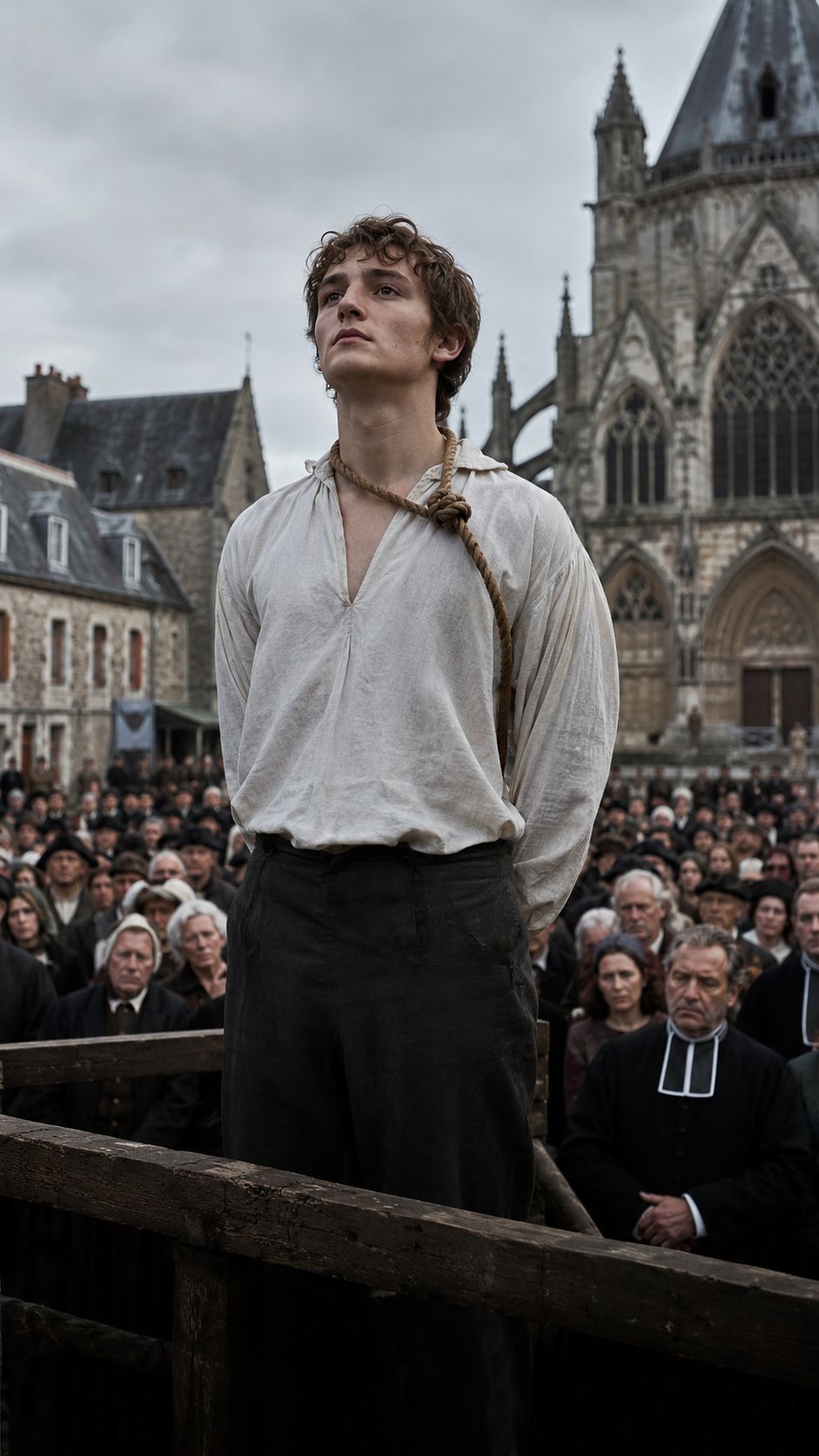
On Saturday, May 3, 1606, he was executed in the churchyard of St Paul’s. He went to the scaffold insisting he had not plotted anything and that what he could be blamed for was keeping a secret he thought he could not break.
What happened next is disputed. One version, which the biographer Antonia Fraser gives, is that the crowd, many of them sympathetic, pulled on his legs as he hung, so that he died quickly and was spared the butchery of the full traitor’s sentence. Alan Haynes disagrees, and says the king ordered that Garnet be left to hang until dead. The Catholic Encyclopedia says nothing about the crowd at all, only that the watch on the scaffold was so close that Catholics secured very few relics. Popular retellings add that nobody cheered when his heart was lifted with the cry of “Behold the heart of a traitor”. The cry is recorded. The silence of the crowd is unverified, and the leg-pulling should be read as one historian’s account against another’s.
The Legend of the Straw
Then comes the part that made him famous. A husk of straw that had caught Garnet’s blood reached a young Catholic named John Wilkinson (the Catholic Encyclopedia spells it Wilkerson). Months later, the story goes, Wilkinson showed it to a Catholic gentleman, who saw that the congealed blood on one husk had settled into a tiny human face. Onlookers said it resembled Garnet’s portrait.
The Catholic Encyclopedia’s own account, from a believing source, concedes that the excitement of the witnesses may have shaped how much of the face they saw, and says the Archbishop of Canterbury examined witnesses, whose evidence it takes to support that some shape was visible. Only that one Catholic-leaning account of the examination is available. A secondary source reports that Protestants treated the cult as a sign of Catholic sympathy for regicide, and that the claims grew in the telling, but the original has not been seen, so this is a pointer only. The straw was kept by English Jesuits at Liège and lost during the French Revolution. Engravings of “Garnet’s Straw” circulated, and they are what remain.
Everything about the face rests on partisan testimony. It cannot be examined, and no claim is made that it was a miracle.
The Modern Relic
The scaffold stood in the churchyard at the west end of old St Paul’s. That cathedral burned in the Great Fire, and Wren’s St Paul’s now stands on the site, so there is no mark of the scaffold itself to see. Hindlip Hall, where he was taken, is not the house he knew. It is now owned by West Mercia Police and is not open to the public, and the sources disagree on the date of the earlier house’s demolition (1814 or 1820 are both given), so the present building is described only as a later rebuild.
The nearest place you can walk into his world is Coughton Court in Warwickshire, the Throckmorton house, now National Trust property. The family were only indirectly implicated in the plot, though it is said that conspirators rode there after the discovery. Its gatehouse tower holds two stacked priest holes, rediscovered in 1858 with a rope ladder still inside. The Trust’s account is cautious about their builder: they are described as unlikely to be Owen’s work.
Whether Garnet was a martyr to the confessional or a traitor who knew enough to stop a massacre is the argument that never ended. The straw, whatever it showed, was the part both sides agreed to fight over.