James Aitken was a twenty-four-year-old Scot with a grudge, a few borrowed pounds and a plan to cripple the Royal Navy with fire. Known to the newspapers as John the Painter, he is often called Britain’s first terrorist, a label that tells you more about our own age than his. He was hanged on March 10, 1777, from the mizzenmast of a warship, set up at the gate of the yard he had tried to burn.
The Horror
Aitken was born in Edinburgh on September 28, 1752, one of a large family. He had a short apprenticeship as a painter in 1767, which gave him his nickname, and drifted into crime. He sailed to Virginia under an indenture, ran away to North Carolina, and spent roughly two years in the American colonies before returning to Britain. By then the rebellion was a war, and he had decided, largely on his own, that he could help it by setting fire to the places where the king’s ships were built and kept in repair.
He went to Paris and forced his way into a meeting with the American agent Silas Deane. Deane was sceptical. Aitken left believing he had Deane’s backing, though all he is known to have received was a few pounds, lent. Back in England he was told to meet Edward Bancroft, and told him at least some of his intentions. The detail that follows is thin, and one blog adds that the man he was sent to meet in London was a double agent.
On December 7, 1776, he got into the rope house at Portsmouth Royal Dockyard with home-made incendiary devices. This is where the story and the record part company. A popular retelling calls it serious damage and a nationwide panic. The Portsmouth Historic Dockyard blog says the fire was put out with “little damage” after hundreds of men fought it, and Wikipedia calls his campaign “only marginally successful”. Early investigators were not even sure it was arson. The terror came from what it might have meant, not from what burned. He also attacked Bristol, by the standard account, and failed at Plymouth, by a single blog’s. Other fires of the period were wrongly pinned on him.
A reward notice described a man called “John the Painter”. He was arrested, by one account at Odiham in Hampshire, for housebreaking, then charged with the dockyard fire. Another painter, John Baldwin, visited him in prison, won his trust and passed on what he said. The trial was at Winchester in the first week of March 1777, and sources disagree on the day, the 6th or the 7th. Aitken pleaded not guilty, but the confessions he had made to his betrayer were taken in court as fact, and he was sentenced to death. Three or four days later he was dead.
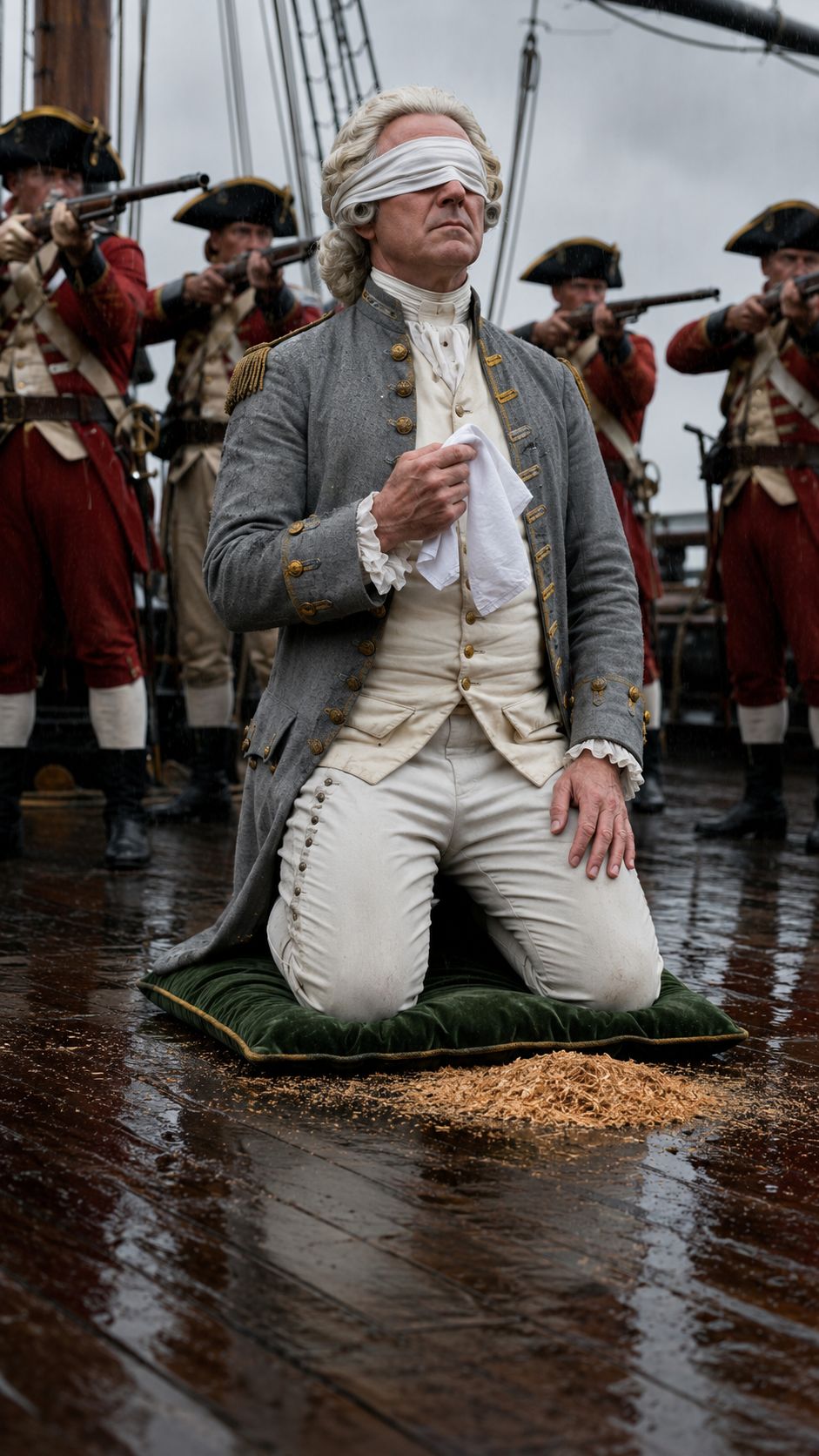
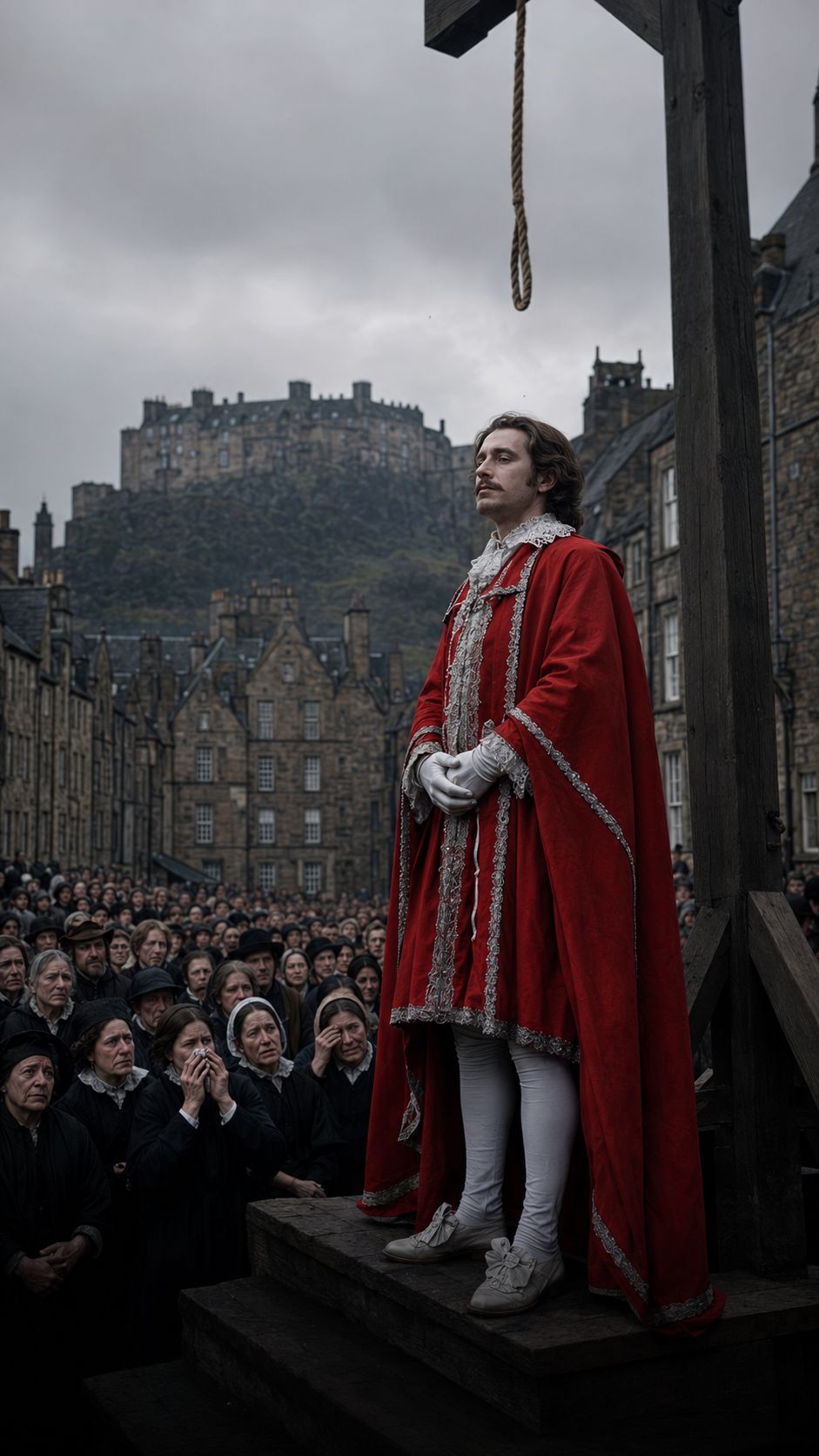
The state wanted the sentence seen. The mizzenmast of HMS Arethusa was struck from the ship and re-erected at the dockyard entrance. It is widely described as the highest gallows ever used in England. Executed Today says his body was hoisted about 60 feet once he was turned off, and adds “still-strangling”, a grim detail that suggests he was alive when it rose, though that is one popular source’s wording. Popular retellings give sixty-seven feet and twenty thousand watching. No source gives a measured height, and the crowd of 20,000 is a figure Wikipedia itself hedges with “reportedly”. Treat both as the legend’s round numbers.
His reported last words were submissive and sorry. The historian Jessica Warner doubts they were his, since such speeches were usually written for the condemned, and she has no doubt, she says, that he “made a brave end of it”.
Afterwards the body was cut down, put into a gibbet, rowed across the harbour mouth and hung in irons at Blockhouse Point, at Fort Blockhouse in Gosport, where it stayed for several years. What became of it is unclear. Popular retellings say it was tarred, but no source mentions tar.
The Legend of the Relics
A popular retelling says a shackle from his gibbet survives. The nearest truth is stranger and less certain. The Westgate Museum in Winchester has displayed a set of gibbet irons since it opened in 1898, which tradition says held Aitken. The Hampshire Cultural Trust article doubts it. A 1927 letter from the Winchester city librarian noted that they show no weathering from years outdoors, and that their rivets would not have been used in 1777. They were given in 1890 by the Prison Commissioners at Winchester, where no gibbeting took place, and nobody can say how they would have come back from Blockhouse Point. Another relic, a preserved finger said to be Aitken’s thumb, was used as a pipe stopper in a dockside pub, passed into Portsmouth City Museum and was destroyed in the Second World War. This appears in one source only.
The Modern Relic
Portsmouth Historic Dockyard is still a working naval base and a museum, and you can walk the ground his fire touched, though the exact position of the dockyard gate in 1777 is unconfirmed. Across the harbour mouth is Blockhouse Point at Gosport, where the body hung. The best thing to look at is the thing you cannot trust. In the upper chamber of the Westgate Museum in Winchester hang iron bands in the shape of a body. Whether Aitken ever wore them is, on the evidence, unlikely, and nobody is quite sure whose they were.