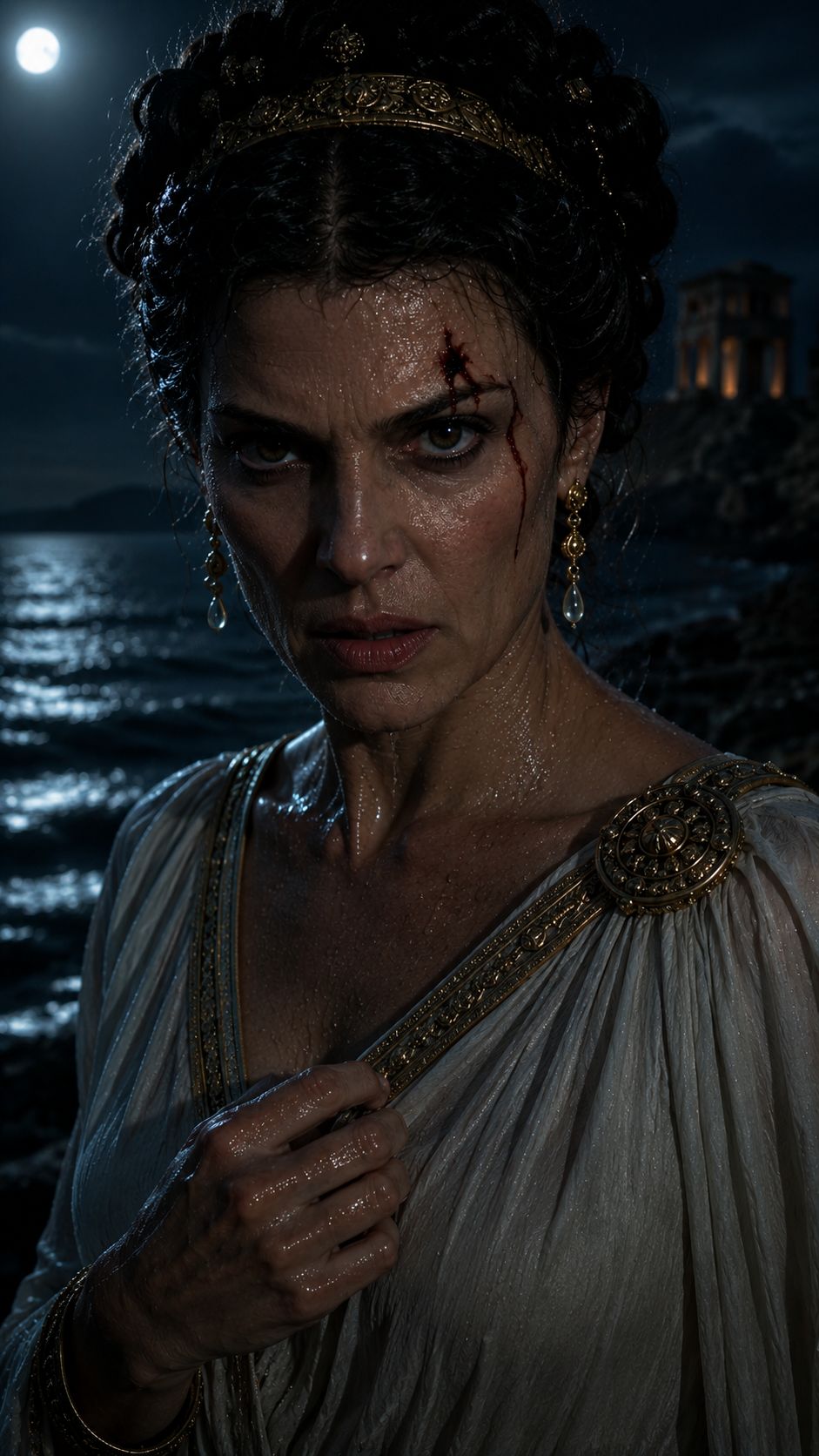
Galswintha was a Visigothic princess, the daughter of King Athanagild of Spain, and she was sent north to be queen of a Frankish kingdom. She had a great deal of treasure and, as it turned out, a husband who already loved someone else. What follows rests almost entirely on one man, Gregory of Tours, who was writing in the years after the event and had views of his own about the Merovingian court.
The Horror
The story begins with a competition. Gregory tells us that King Sigibert of Austrasia, seeing that his brothers were taking unsuitable wives, sent to Spain and asked for Athanagild’s daughter Brunhilda, who arrived with great treasures. Their brother Chilperic saw this, and “although he had already too many wives”, asked for her sister Galswintha. In Gregory’s words, Chilperic promised through his ambassadors that he would abandon the others if he could obtain a wife worthy of him, the daughter of a king. Athanagild accepted and sent his second daughter north with a great fortune. Gregory adds that she was the elder of the two sisters.
She travelled to Francia and was received with great honour and married, and Gregory says Chilperic loved her, in part because of the treasure she had brought. Modern summaries place the wedding at Rouen, and the five territories Chilperic is said to have given her as a dowry or morning-gift are named as Limoges, Bordeaux, Cahors, Béarn and Bigorre. Those come from a modern summary rather than from Gregory’s own account, and the Rouen detail is not in the relevant passage of Gregory, so both are probable rather than proven.
Then, Gregory says, trouble came from Fredegund, the woman Chilperic had “had before”. A great scandal arose between the couple. Galswintha, who by now had converted from Arian Christianity to the Catholic faith, complained that she was continually enduring outrages and had no honour with him. She offered to leave all the treasure she had brought and asked to be allowed to go home. Chilperic, Gregory writes, “made ingenious pretences and calmed her with gentle words”.
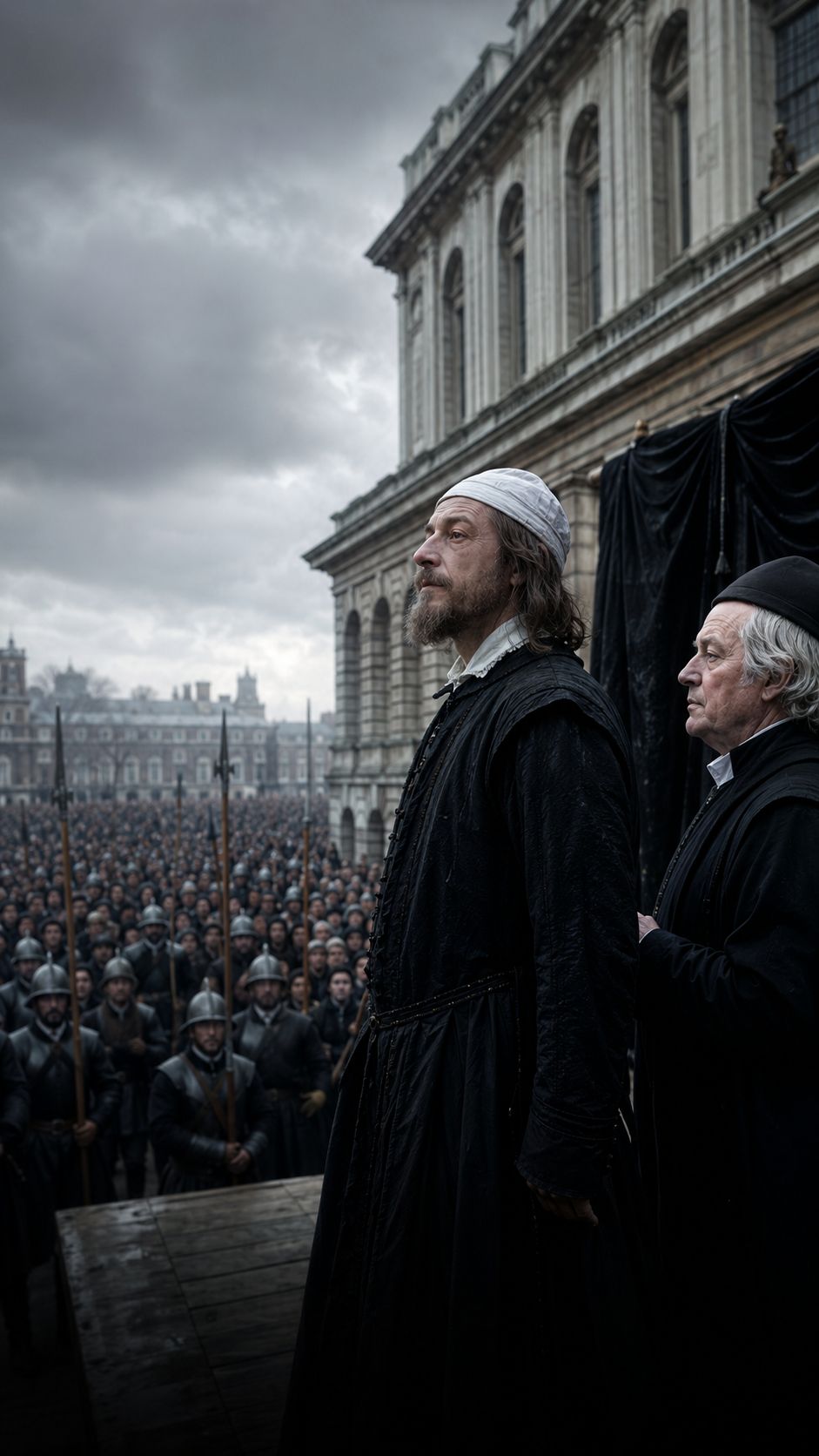
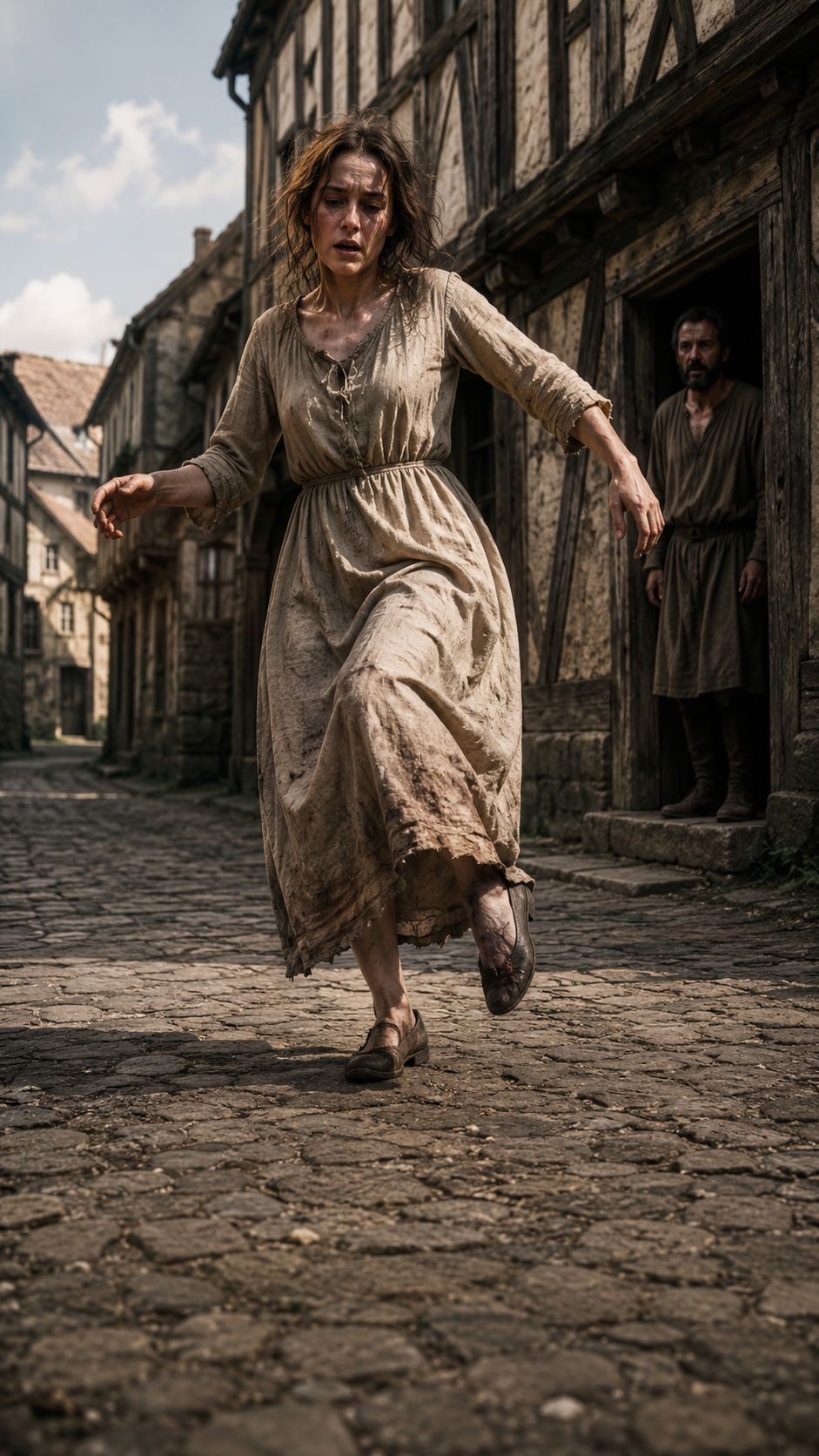
Then comes the sentence on which the whole story hangs. “At length he ordered her to be strangled by a slave and found her dead on the bed.” That is the whole of the documented death: no date, no place, no name for the servant and no description of the night. After a few days of mourning, Chilperic married Fredegund. A modern summary says the remarriage came three days after the killing, but Gregory himself says only “a few days”. His own conclusion is carefully phrased: after this, “his brothers thought” that the queen had been killed at his command, and they tried to drive him from his kingdom.
That is the point at which to be honest about what is known. Gregory’s account is the only detailed one, and he was no neutral reporter. He was a bishop writing about rival royal houses, and he was no friend to Fredegund, so his picture of the court should be read with care. His account puts the order on Chilperic, while the Wikipedia article on Brunhilda says Fredegund is “said to have murdered or ordered the murder”, a line of attribution Gregory’s own text does not make. The detail of the strangling by a slave comes from Gregory and from no independent source. Gregory presents it as fact. Nobody was tried, and no contemporary court ever heard evidence. Historian Patrick Geary has suggested a further motive, that Chilperic feared Galswintha would leave and take her dowry with her. That is an interpretation, though it fits what Gregory says about her asking to go home.
The consequences are better documented than the crime. Her sister Brunhilda, married to Sigibert, never forgave it. The feud between Austrasia and Neustria that followed is traditionally reckoned at about forty years. Gregory records that Chilperic later seized Brunhilda after Sigibert’s death and held her at Rouen, where Chilperic’s own son Merovech married her. A modern summary says Sigibert was killed by assassins sent by Fredegund. Brunhilda lived until 613, when, by the account the Wikipedia article gives from the Liber Historiae Francorum, she was torn apart by horses. The Treaty of Andelot, a pact between Brunhilda’s family and her brother-in-law Guntram which Gregory transcribes in full, refers to the cities Galswintha had received as dowry or morning-gift and confirms that her sister held them. That treaty is dated 587 or 588, with the editor’s note giving 588.
The Modern Relic
There is very little to see. No tomb, church or plaque connected with Galswintha’s death has been verified, and the place of the killing is uncertain. Gregory does not name it. Rouen is the best-attested place in her story, as the end of her journey and the city where Brunhilda was later held, but a Rouen connection for her burial is unconfirmed. Anyone planning a visit should treat Rouen as the story’s anchor, not as a documented murder site.
What survives is words. Venantius Fortunatus, the Italian-born poet working at the Frankish courts, wrote a long poem on her (Carmina VI.5) which, according to Wikipedia’s summary, presents her as saintly and her murder as an offence against God. It was written for the occasion, not as evidence, but it shows how the death was already being understood.
Legend, clearly marked as such: Gregory himself reports a miracle at her tomb. A lamp hanging by a rope before it is said to have broken free, fallen onto the pavement and sunk into the hard stone as if into something soft, “buried to the middle but not at all damaged”. Gregory presents this as a sign of God’s displeasure at her murder. It is a pious story told by a bishop, with no physical evidence, and no lamp or flagstone has been identified.