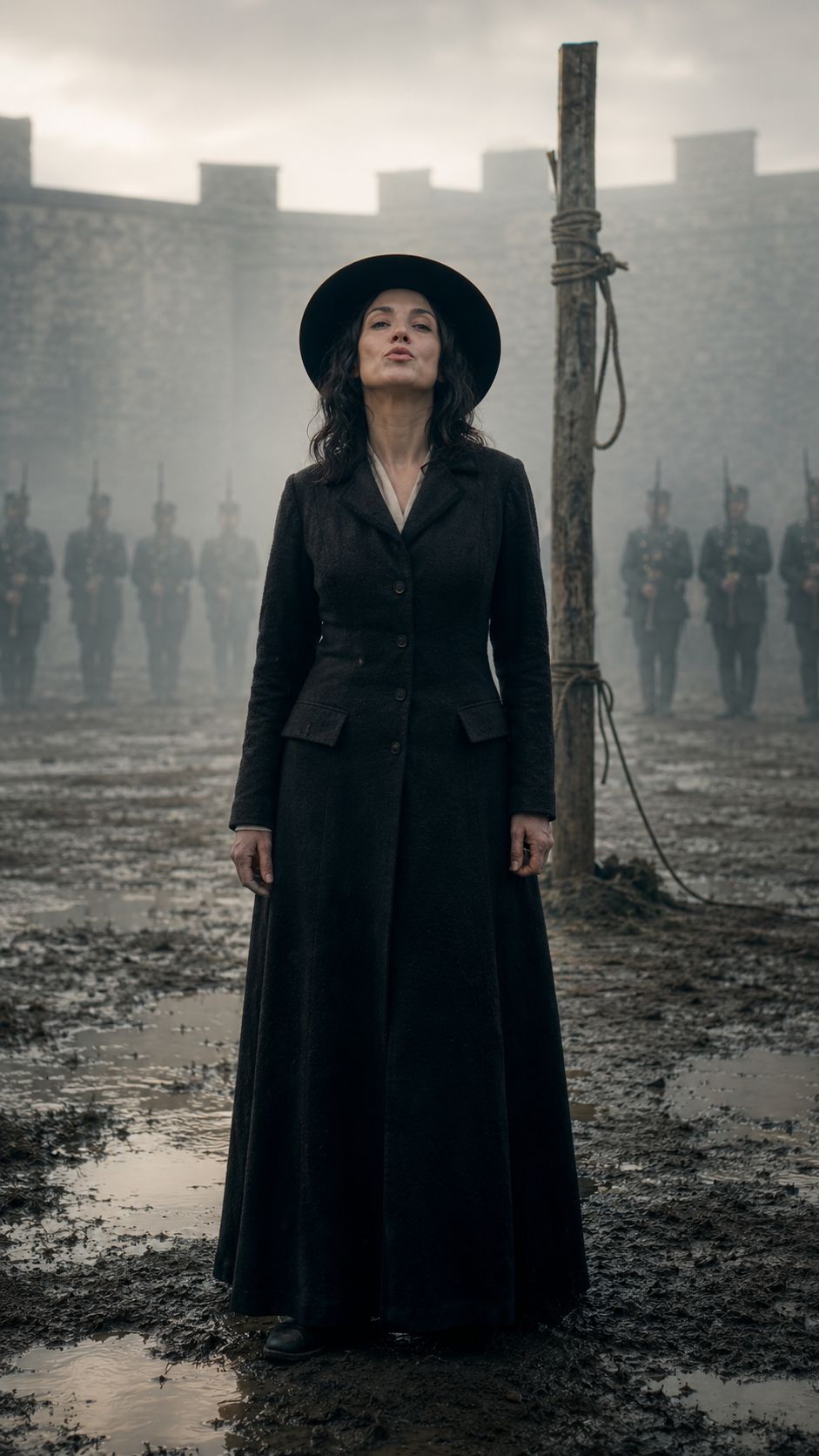
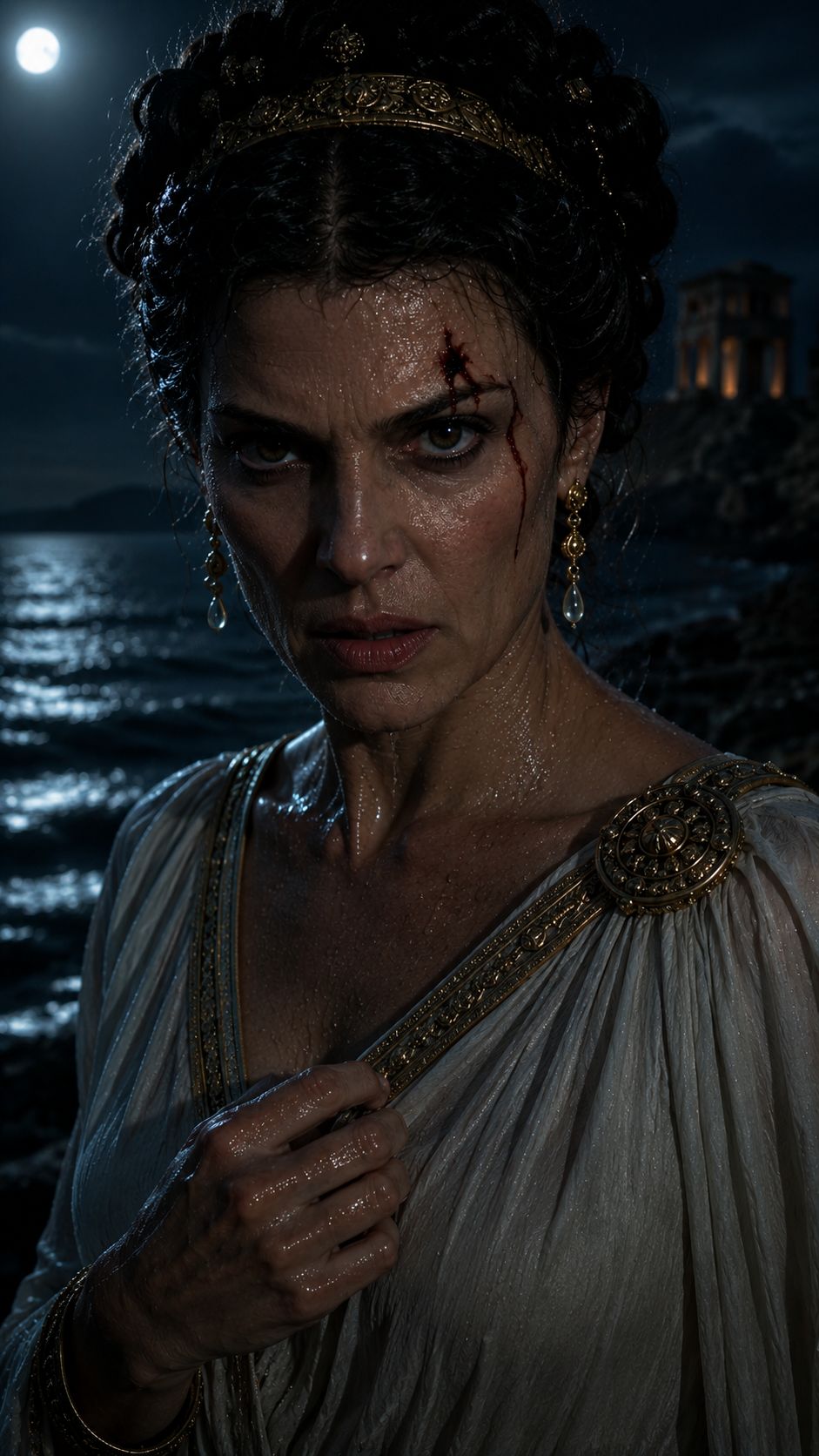
Christina of Sweden was born in Stockholm on December 18, 1626, the daughter of the warrior-king Gustavus Adolphus, and she was brought up to rule. She invited Descartes to her court, and he arrived in October 1649. He died the following February. The old story that her dawn lessons killed him is a story; her French envoy Chanut put the cause down as pneumonia. In 1654 she abdicated at Uppsala, took the crown off with her own hands when the official sent to do it hesitated, converted to Catholicism and went abroad. By 1657 she was in France, lodged at Fontainebleau as the guest of a king who was not yet twenty. She had no throne, but she behaved as though she still had one.
The Horror
Her Grand Equerry, the master of her horse, was Gian Rinaldo Monaldeschi, an Italian marquis and one of her most trusted men. Over about two months in the autumn of 1657 she became convinced he was betraying her. She got hold of letters she took to be proof. Neither she nor anyone since has said clearly what they contained, and the originals are gone. Executed Today records that her own account never names the treason, and that he was accused of forging letters. Father Le Bel, a prior who acted as her chaplain, said the papers concerned her “amours”; that is his word, and it is only his.
The accounts agree on the shape of what followed. On November 6, she gave Le Bel a sealed packet to keep. On Saturday, November 10, at about one in the afternoon, she sent for him again and received Monaldeschi in the Galerie des Cerfs, the Deer Gallery. She made him read the papers. He denied them, was shown his own seal and handwriting, and murmured an acknowledgment. Le Bel was told he had an hour to prepare the man for death. Monaldeschi begged for mercy. So did Le Bel. Christina withdrew.
Her men then fell on him. The chief name among them is Santinelli, her captain of the guard, though the sources do not agree on his first name: Ludovico in one, Francesco in another. He was wearing a coat of mail, which turned the first blows. He was chased into an adjoining room and was finally killed by a wound in the throat. How long it took is not settled; the sources give no timing, and the drawn-out struggle of popular retellings rests on Le Bel and on tradition.
A word on the date. One source gives only “October 1657”. The others, the Household Words retelling of Le Bel among them, give November 10. November 10 is the better supported, and it fits the Saturday summons in the dated narrative.
Whose Right?
Christina never pretended to regret it. She said she alone was responsible. Mazarin, who wanted no scandal in one of the king’s own palaces, advised her to say it was a brawl among courtiers, and she refused. Her defenders, Leibniz among them, argued that a sovereign held the power of judgment over her own household. Her critics answered that she had given up her throne, was a guest on French soil, and had killed a man without a trial while he asked for a priest.
The court was cold with her afterwards. Louis XIV visited her about two weeks later and, according to Wikipedia, did not mention it. His mother, Anne of Austria, was impatient to see her go. She went on to Rome in 1658, where the Pope was no keener to have her, and she died there in April 1689 at the age of sixty-two. She was buried in St Peter’s, one of the few women laid in the Vatican Grottoes.
A Tradition Worth Flagging
The popular telling says she paid for Masses for his soul and had him buried in the local church, as though it had been a lawful execution. The burial is supported: the Château de Fontainebleau’s own page says he lies in the church at Avon. The Masses are unconfirmed and should be treated as tradition. The same goes for the idea that the whole thing was a settled act of justice. The rest of the evidence says she had her own reasons and made her own rules.
The Modern Relic
The Château de Fontainebleau is open to the public. Its own website says that Monaldeschi’s chain mail and sword are kept there, and that the killing inspired painters and writers well into the nineteenth century: a large 1824 painting of Christina handing him the letters while he kneels, a play by Dumas and a sculpture by Fauveau. Many retellings say the Galerie des Cerfs is on the visitor route and that you can walk the floor where it happened. Whether it is open to the public is unconfirmed, so check before you travel.
The grave at Avon, in the church said to be Saint-Pierre, is a short distance from the château. The gallery is the better-known site, but the burial is the better documented.