At about twenty to ten on the morning of November 1, 1755, the city of Lisbon was at Mass. It was All Saints’ Day, the feast that opens the Christian remembrance of the dead, and candles were burning in the churches and homes of a city of some 200,000 people.
The Horror
The earthquake struck at about 09:40 local time. Contemporary reports say the shaking lasted between three and a half and six minutes. Modern estimates of the magnitude run from 7.7 to 9.0, though a 2020 reassessment suggests it may have been lower, and the position of the epicentre has been debated.
A tsunami followed about 40 minutes later and surged up the Tagus. It reached about 20 metres on the North African coast and about 3 metres in Cornwall. Candles knocked over during the observances started a firestorm, and the sources describe people being asphyxiated up to 30 metres from the flames. About 85 per cent of Lisbon’s buildings are said to have been destroyed, partly by fire.
The Royal Ribeira Palace, on the site of the modern Praça do Comércio, was destroyed, together with its library of 70,000 volumes and its works of art. King José I and his family escaped because they had left the city after attending Mass.
The dead cannot be counted with certainty. Lisbon’s toll is estimated at between 30,000 and 40,000, and perhaps 10,000 more died in Morocco, giving a total of 40,000 to 50,000 across Portugal, Spain and Morocco. A 2009 study found the contemporary reports vague and hard to separate from a series of earthquakes in Morocco later in November.
The king’s minister, Sebastião de Carvalho e Melo, later the Marquis of Pombal, took charge of the response. He sent a questionnaire to every parish asking about the timing and effects of the shocks. The answers are kept in the Torre do Tombo, and he is regarded as a forerunner of modern seismology. The line attributed to him, “Bury the dead and heal the living”, is probably apocryphal; the historian Kendrick considers it so.
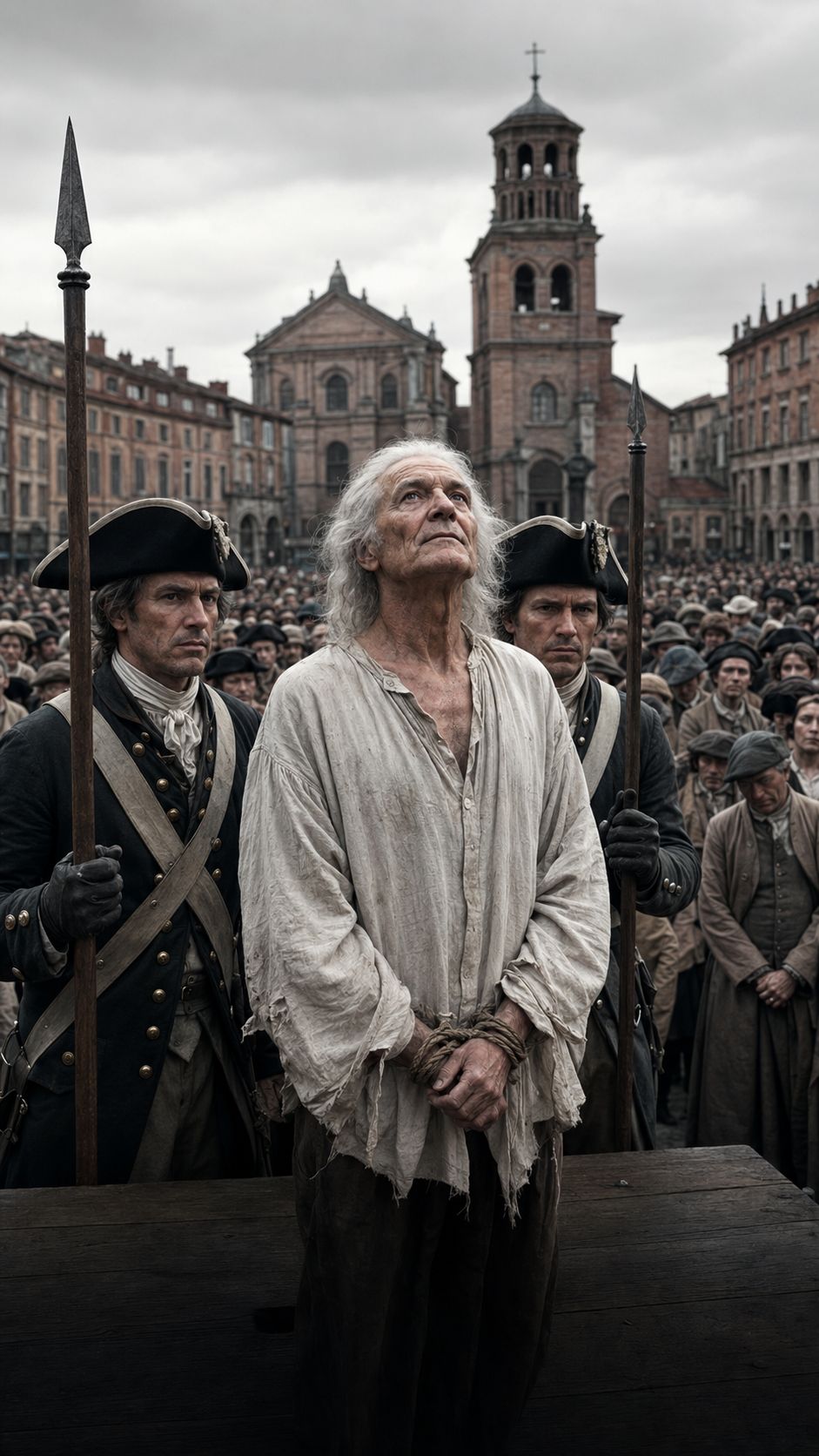
The Jesuit Gabriel Malagrida preached that the earthquake was divine punishment and was banished to Setúbal in November 1756. After the attack on the king in 1758 he was arrested and handed to the Inquisition, which convicted him of heresy on the strength of transcripts of visions, whose authorship has never been proved. He was strangled by the garrotte in the Rossio on September 21, 1761, aged about 72, and his body was burned and the ashes thrown into the Tagus. The charge was heresy over visions, not the sermon on the earthquake.
Voltaire used the disaster in his poem on the Lisbon disaster and in Candide, challenging the idea that this is the best of all possible worlds.
The Legend
Popular retellings say the Carmo roof fell on a congregation at Mass, and that survivors watched the Tagus drain away before the sea came back. These details are unconfirmed. What is confirmed is that the stone roof of the Carmo nave collapsed after the earthquake and was never rebuilt. The tale of the Carmo congregation is unconfirmed.
The Modern Relic
The Carmo Convent was founded in 1389 by Nuno Álvares Pereira. Its library of about 5,000 volumes was destroyed in 1755 and its 126 clerics had to leave. The ruined church is the Carmo Archaeological Museum, and only the pointed arches of the nave survive. The Praça do Comércio, which was rebuilt under Pombal, now measures roughly 175 by 175 metres and is open to the river.