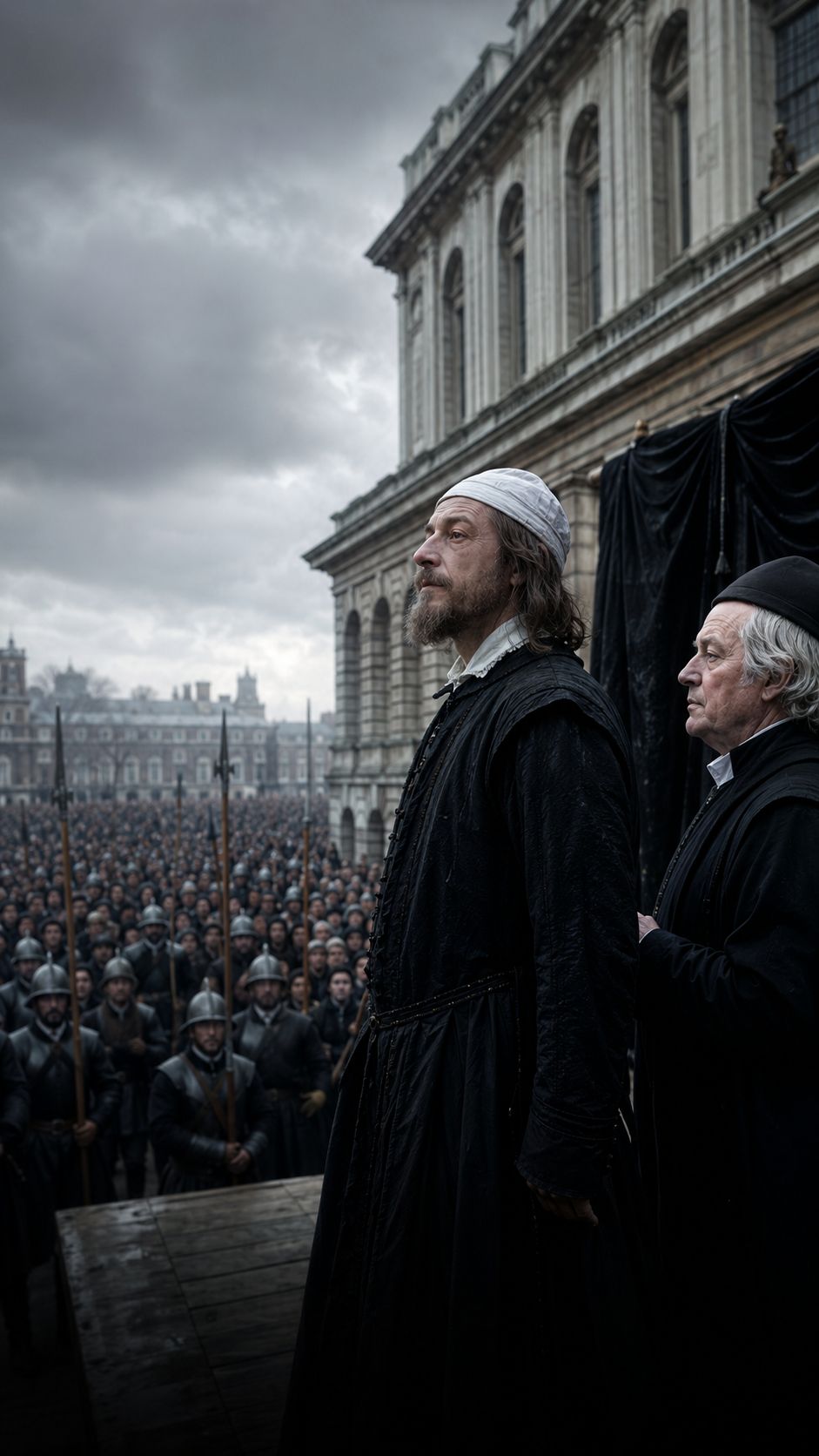
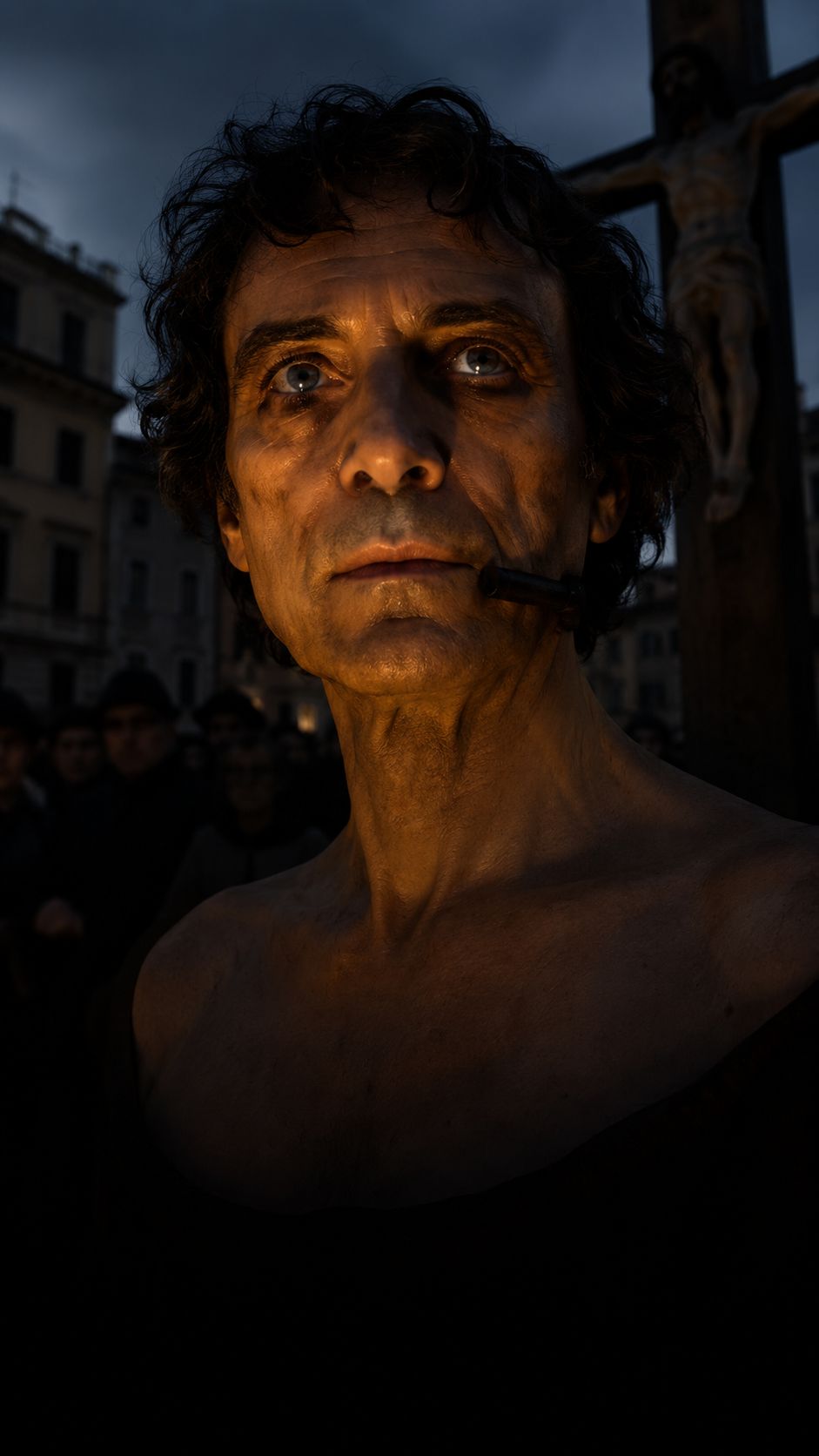
Polycarp is one of the first Christian martyrs whose death is described in detail by people who were there, or close to it. The account was written by his own church at Smyrna, on the Aegean coast of what is now Turkey, and it has survived as a letter. It is a pious document, written by believers for believers, and it mixes sober narrative with details that no modern historian would accept as literal fact. This telling separates the two.
The Horror
Polycarp was bishop of Smyrna. Irenaeus and Tertullian, writing later, said he had been a disciple of John the Apostle, and the tradition dates his life from about 69 AD. When he died he was, on that reckoning, about eighty-six. The date of his death is not settled. A later addition to the Martyrdom gives Saturday, 23 February, in the proconsulship of Lucius Statius Quadratus, which points to about 155 or 156. Eusebius placed it in the reign of Marcus Aurelius, around 166 to 167.
The letter describes a local persecution. Christians were being sent into the arena to face wild beasts, and one of them, Germanicus, is praised for meeting them bravely. The angry crowd then demanded that Polycarp be found. He first meant to stay in the city, but his friends persuaded him to leave, and he withdrew to a farmhouse. According to the letter, three days before his arrest he dreamed that his pillow was on fire and told his companions that he would be burned alive. That is the church’s report of a premonition, and it cannot be checked.
Soldiers found him after two young servants were seized. One of them gave him up under torture, and the letter notes that the informers came from his own household. The soldiers arrived in the evening. By the letter’s account Polycarp could still have escaped but chose not to. He ordered food to be set out for the men who had come to arrest him and asked for an hour to pray. He prayed for two hours, and some of the soldiers are said to have regretted what they had come to do.
He was taken into the city, and the officials on the way urged him to say “Lord Caesar” and offer sacrifice, which he refused. In the stadium, the proconsul pressed him to swear by the fortune of Caesar and to curse Christ. The letter has Polycarp answer, “Eighty and six years have I served Him.” Whether that means he was then eighty-six or had been a Christian for eighty-six years is unconfirmed. It is the best-known line of the account. The proconsul threatened him with beasts and then fire. Polycarp replied that the fire the proconsul offered burned only for a short time.
The crowd demanded that he be burned alive. Wood was gathered quickly, and as the pyre was prepared Polycarp asked to be tied rather than nailed, saying that the God who gave him strength would keep him still. The letter says the fire was lit.
Then comes the part of the letter that is legend. The flames, it says, formed an arch about his body like a sail filled by the wind, and his flesh seemed like bread baking or metal glowing in a furnace, giving off a smell like incense. When the fire failed to consume him, an executioner stabbed him with a dagger. A dove is said to have flown out, with so much blood that the fire was put out. These are the community’s memories of a martyr they venerated, and none of it is confirmed by any source outside the letter.
What followed is plainer. A request was made that his body not be given to the Christians, out of fear that they would begin to worship him. The letter says the centurion in charge had the body burned. The believers then gathered the bones, which they valued more than jewels or gold, and laid them in a suitable place.
The Modern Relic
The Martyrdom of Polycarp is itself the relic. It is among the earliest detailed accounts of a Christian martyrdom, and it records the bones of a martyr being gathered and kept with honour. His feast is kept on 23 February in the Catholic, Orthodox, Anglican and Lutheran calendars. Relics attributed to him are said to lie under the main altar of Sant’Ambrogio della Massima in Rome. Their authenticity is not established by anything here.
In İzmir, the Church of St Polycarp in the Konak district is named after him. The provincial culture directorate describes the present building as dating from 1625, repaired after the great fire of 1680, restored in 1775 and enlarged and decorated between 1892 and 1898, when the French artist Raymond Péré painted frescoes of the saint’s life. It calls the church one of the oldest buildings in İzmir. Some visitor guides call it the city’s oldest church, which the directorate does not say. The same source places the Roman stadium where Polycarp died near Kadifekale, the hill above the old city. Opening hours for the church are not given and should be checked before a visit.