On tour in 2027 — tell us where you want to see us
Latest stories

The Bell That Cracked Twice Before Big Ben Rang

Westminster's Great Bell cracked in testing, was broken up and recast, then cracked again within two months of ringing in 1859. It was never mended. It was turned an eighth and struck on a fresh spot.

Kings, queens & courtsOn the mapRecord & legend marked

Evidence: thin · Lightly sourced: one or two sources, mostly Wikipedia.

The most recognisable bell in the world has been cracked for nearly all of its working life. It was cracked once before it ever rang in its tower, and cracked again within two months of striking its first hours. It was never repaired. It was turned, and struck somewhere else.

The Horror

The first bell was cast on 6 August 1856 at John Warner & Sons’ foundry on Teesside. It weighed about 16 tons. It was taken by rail and sea to London and, because the clock tower was not finished, tested in New Palace Yard. There it cracked beyond repair. Stockton’s heritage service dates the crack to October 1857 and says the clapper was generally judged too heavy. That bell was broken up in February 1858.

The metal was recast at the Whitechapel foundry, under George Mears, as a new bell of 13.5 long tons (about 13.7 tonnes). Wikipedia gives the casting date as 10 April 1858. The Stockton page gives April 1859, and the two cannot both be right. The bell was raised to the belfry and first sounded on 11 July 1859.

In September 1859 it cracked again. Mears said the clock’s designer, Edmund Beckett Denison, had used a hammer more than twice the maximum weight specified. Only Mears’s account is recorded, and no reply from Denison is. For three years the hours were struck on the lowest of the quarter bells instead.

The repair was not a repair. A square of metal was chipped from the rim around the crack, and the bell was turned one-eighth of a revolution so the hammer would hit a fresh spot. It has sounded slightly different since, in the note of E natural, and it rings with the crack still in it.

The Legend

Popular retellings add that a lighter hammer was fitted afterwards. That is plausible and is unconfirmed. They also claim that the bell’s distinctive tone is the acoustic mark of the crack. The altered tone after the repair is recorded. The reasoning that the crack gives the sound its character is an interpretation, not a documented fact.

The Modern Relic

The Elizabeth Tower rises over the Palace of Westminster. Its 334-step stair to the belfry was joined by a lift in the 2017 to 2021 restoration. The bell hangs in the belfry and still marks the hours with its crack unmended and its hammer set on a different part of the rim. Whether the public can reach the belfry to see the crack is unconfirmed.
Still there todayThe Elizabeth Tower stands at the Palace of Westminster and the bell hangs in its belfry. Whether public tours reach the belfry is unconfirmed, so check with Parliament before planning a visit. See it on the Dark Atlas →
Sources
  • Wikipedia, 'Big Ben' — casting at Stockton-on-Tees on 6 August 1856 by John Warner & Sons at about 16 tons, the bell cracking beyond repair in New Palace Yard during testing, the recasting at Whitechapel on 10 April 1858 at 13.5 long tons (13.7 tonnes), first chiming on 11 July 1859, the September 1859 crack, foundry manager George Mears's claim that Denison's hammer was more than twice the specified maximum weight, three years out of service with the hours struck on the lowest quarter bell, a square of metal chipped from the rim, the bell turned one-eighth so the hammer strikes a new spot, the altered tone, the E-natural, and the crack remaining unrepaired. Mears's account is the only one recorded there
  • Stockton-on-Tees Heritage, 'Big Ben and the Norton Foundry' — casting from 6 August 1856 at Norton, two furnaces and 18 tons of metal, the bell cracking in London in October 1857 with the clapper judged too heavy, breaking up in February 1858, the contract passing to Whitechapel, hoisting in July 1859, a second small crack about two months after ringing began, and about three years out of action. This page dates the Whitechapel casting differently (April 1859) from Wikipedia (10 April 1858)

Nearby on the Dark Atlas

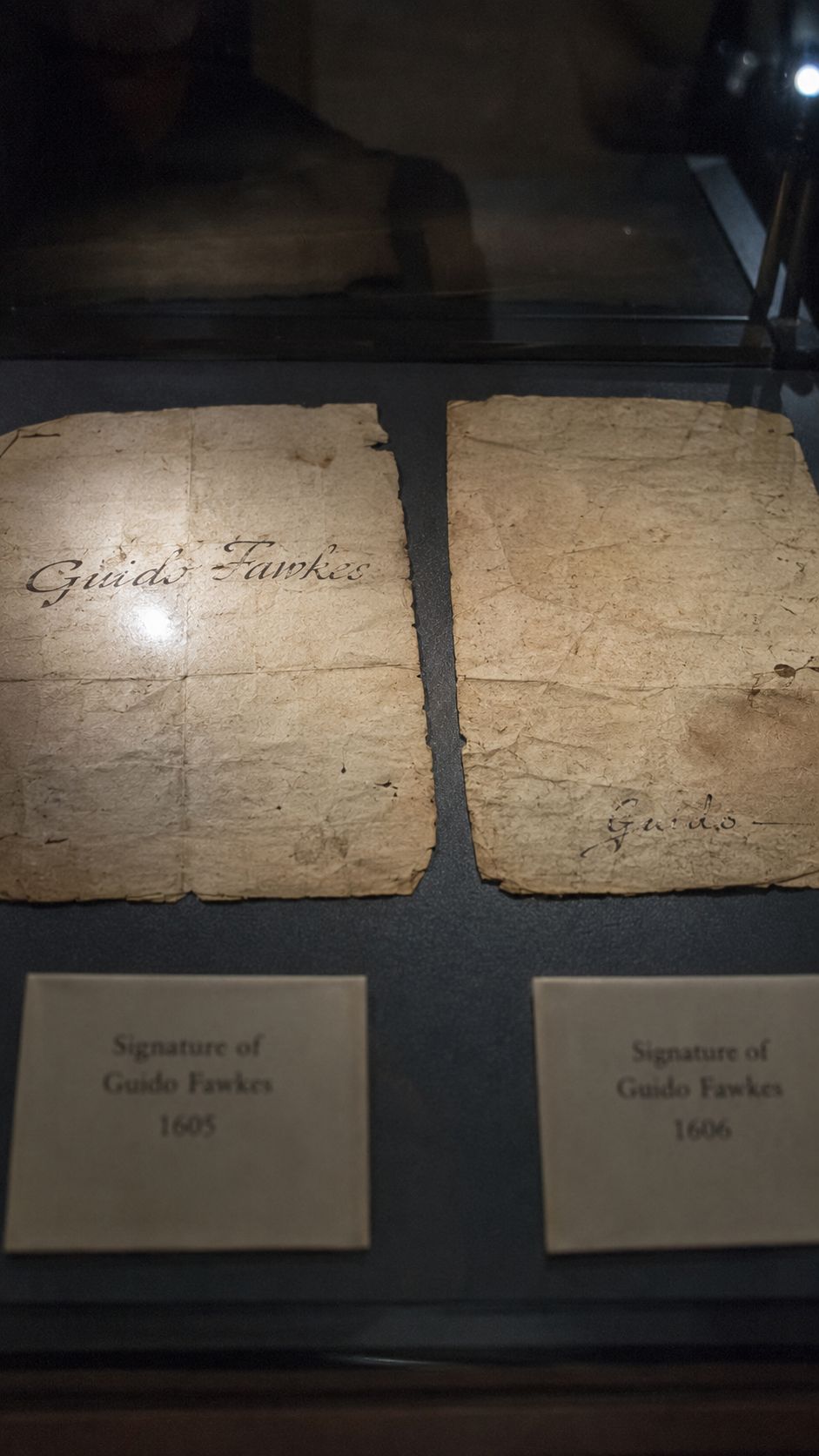
  • The Signature That Broke Under Torture

    Found in a cellar beneath Parliament with 36 barrels of gunpowder, Guy Fawkes signed his first confession after torture with a barely legible scrawl.

  • The Widow Who Carried Her Husband's Head

    A courtier whose old death sentence was revived after one last failed gamble for gold walked to the scaffold, and his widow left carrying his head in a bag.

  • The Child Bride Lost Beneath a Building Site

    Anne Mowbray was married at five to a prince who would vanish in the Tower. In 1964 a digging machine broke into her vault, and the workmen posed with her lead coffin for the newspapers.

  • The Queen Who Was Hidden as a Kitchen Maid

    Anne Neville was widowed at fourteen, hidden by her brother-in-law for her inheritance, crowned beside Richard III, and dead at twenty-eight as rumour accused her husband of poisoning her.

All stories near London →

← Back to the archive