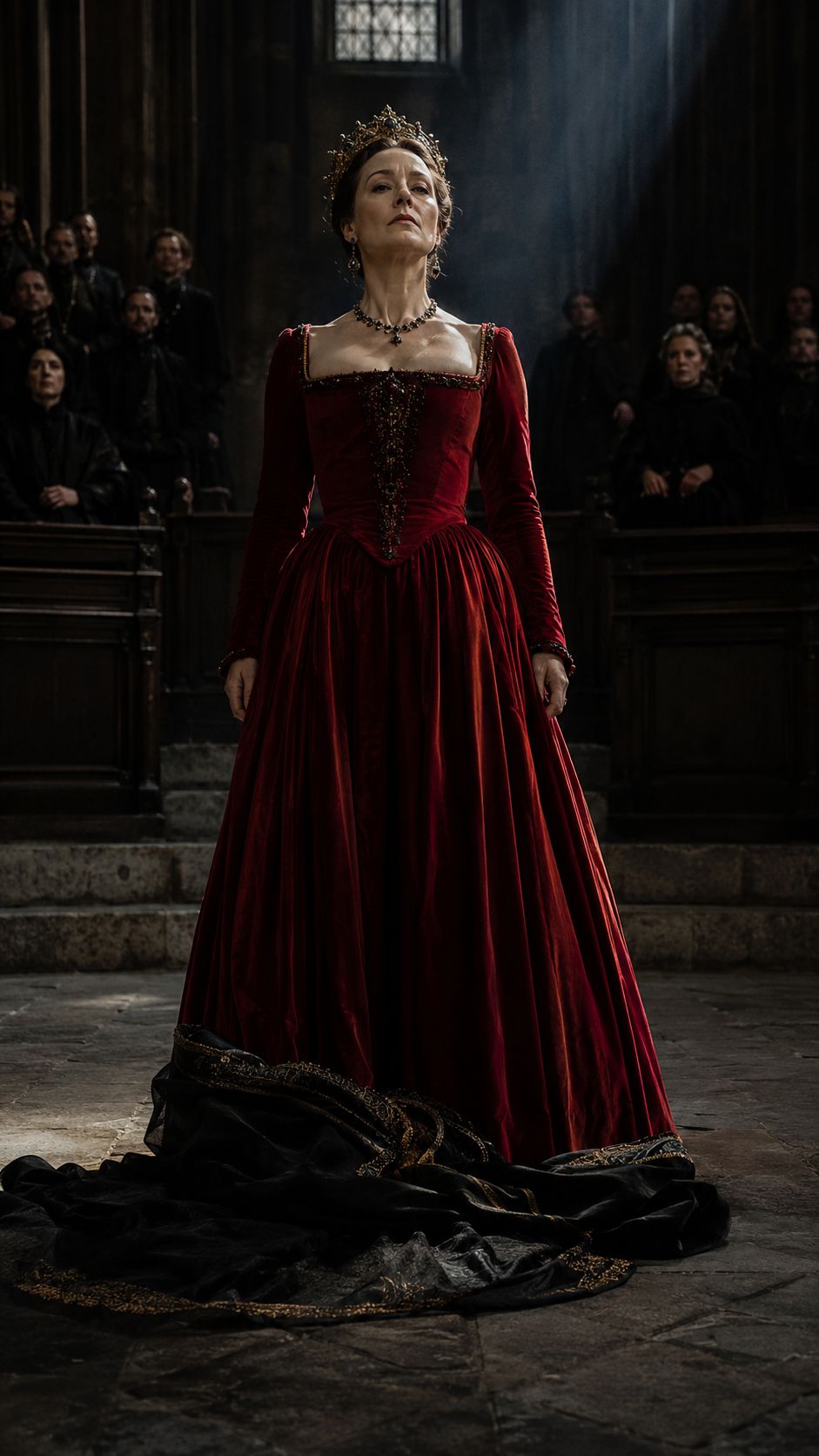
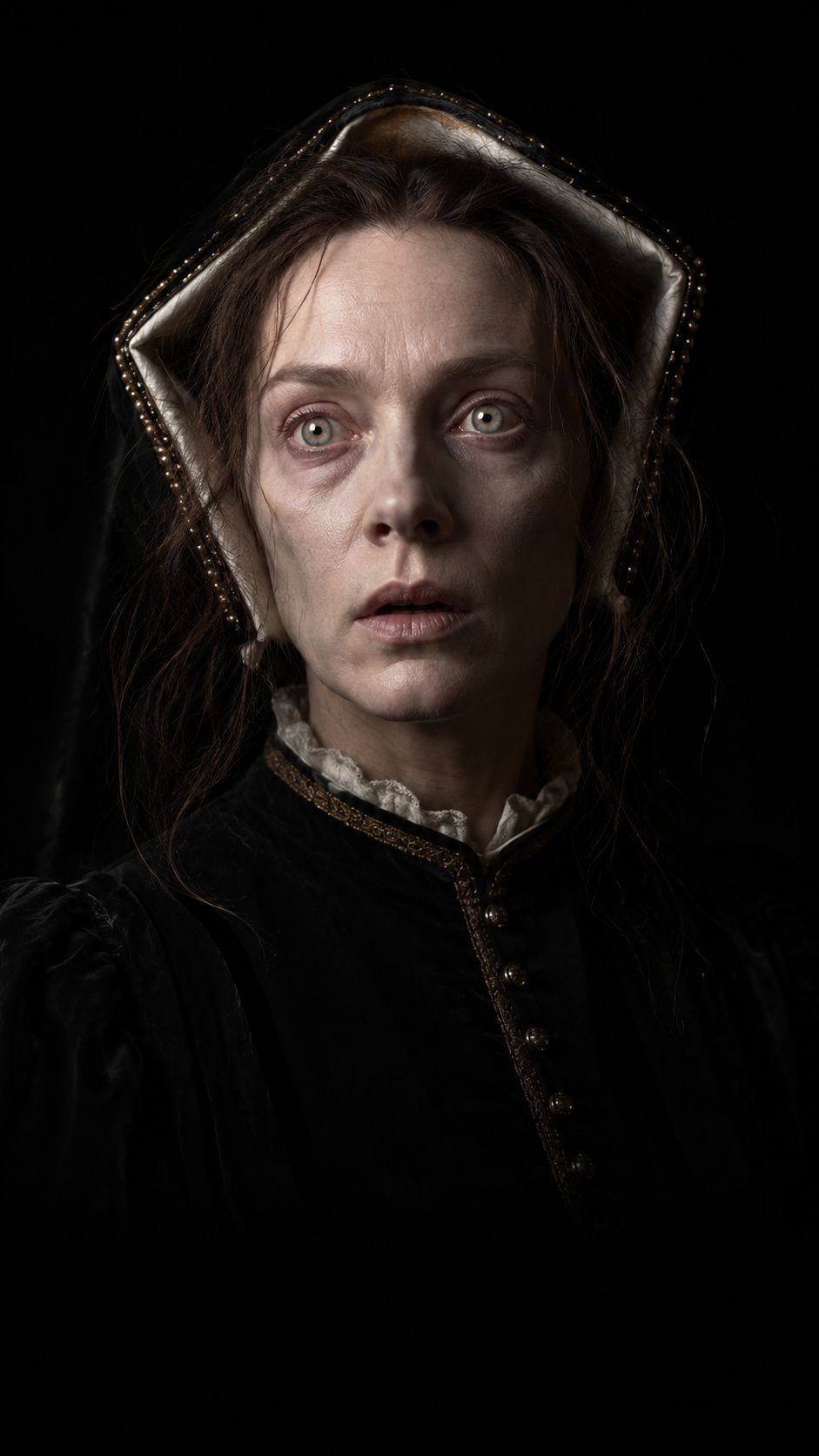
Niccolò III d’Este ruled Ferrara for almost half a century, from 1393 until his death in 1441. He was a capable ruler of one of the most glittering small courts in Renaissance Italy, and he was a man of famously wide appetites. The sources credit him with at least eleven women and twelve illegitimate children. In 1425 he put two people to death for doing what he had done all his life: his second wife, Parisina Malatesta, and his eldest son, Ugo.
The Horror
Parisina was born in 1404, the daughter of Andrea Malatesta, lord of Cesena, and was raised at the Malatesta court in Rimini. In 1418 she was married to Niccolò at Ravenna. The sources put her age at about thirteen; no source settles the point. He was roughly twice her age, and his first wife, Gigliola da Carrara, had died a few years earlier. She bore him twin daughters in 1419 and a son in 1421 who lived only a few months.
Ugo was born in 1405 to Stella de’ Tolomei, Niccolò’s mistress, whom he never married. He was therefore barely a year younger than his stepmother, and he was the eldest of the marquis’s sons. The popular telling holds that the two disliked each other at first, and that Niccolò, hoping to make peace in his household, sent them on a journey together, with the results he had not intended. That detail is tradition, and no source supports it. What the sources do say is that they disagree about how the affair began. One account has Ugo travelling with Parisina in 1424 on a visit to her family, with the couple becoming lovers at Ravenna. Another has her fleeing the plague of 1423 to a country castle with her stepson, where it began. Both agree that it went on at the family’s villas after they returned to Ferrara.
The discovery is told in two versions. The older English telling comes from Edward Gibbon, who wrote that the marquis learned of it through “the testimony of a maid, and his own observation”. Wikipedia says only that Niccolò had the couple watched through one of Parisina’s maids. The picture of the marquis spying through a crack in a door is a later embroidery, and no source supports it.
What followed was quick. The couple were imprisoned in the castle and, after a hurried trial, sentenced to death. On May 21, 1425, both were beheaded. Parisina was about twenty and Ugo about nineteen. Executed Today, a popular site, adds that a courtier who had kept the secret was beheaded as well. That is a single weak report. It is unconfirmed, and it does not appear in the Wikipedia articles.
The question of where is less settled than the tourist version suggests. The sources agree on “the castle” in Ferrara, and Gibbon says the same. The idea that the sentences were carried out in the dungeons of the Castello Estense, in the basement cells of the Torre dei Leoni, rests on the castle’s own tradition. Contemporary documents may say more.
The marquis’s reaction is also reported rather than documented. Executed Today says that he was “stricken with anguish and remorse”, with a note that this may be partly a reaction to the horror of his own subjects. Gibbon wrote that he “published his shame, and survived their execution”. The vivid scene of Niccolò pacing his rooms all night comes from popular retellings, which present it as what chroniclers say. No chronicle or modern citation has been found for it.
Then came the decree. According to Wikipedia, Niccolò ordered in 1425 that every woman in his domains found guilty of adultery should be put to death. The same article says he had to rescind it, as it would have depopulated Ferrara. Executed Today says it was carried out at least once, on a magistrate’s wife. These two accounts do not fit neatly together: the decree was either almost never applied or applied just once before it was dropped, and the sources do not allow more than that.
One further detail should be treated with caution. The charge is sometimes called incest. Executed Today points out that the two were not related by blood, so the offence was adultery with a stepson and, in the eyes of the age, a breach of the household. Whether the two were guilty at all rests on the verdict of the man who killed them. The Wikipedia articles and Executed Today both call the affair “alleged”, and the same site wonders in passing whether a court rivalry lay behind it, since a legitimate heir from Parisina could have displaced Ugo. That is speculation, and nothing in the sources confirms it. Wikipedia notes that in 1429 Niccolò named another illegitimate son, Borso, as his heir.
The Legend
Much of the fame of Parisina rests on Lord Byron. In 1816 he wrote Parisina, a poem of 586 lines that fixed her in the English imagination as a doomed lover. Byron changed the story freely. In his poem the husband, “Azo”, learns of the affair when Parisina murmurs Ugo’s name in her sleep. The two lovers were once engaged. Only “Hugo” is beheaded, while Parisina is forced to watch and is left shrieking and apparently mad. None of this is in the record.
The story had been told before, by the Italian writer Matteo Bandello, and Gibbon’s account was Byron’s immediate source. After Byron, Gaetano Donizetti made an opera of it in 1833, with a libretto by Felice Romani, and Pietro Mascagni made another from Gabriele D’Annunzio’s play in 1913. Painters were drawn to it throughout the nineteenth century. A girl married at thirteen and beheaded at twenty became a Romantic heroine, and the Ferrara of her own time disappeared behind the verse.
The Modern Relic
The Castello Estense stands in the middle of Ferrara at about 44.84 degrees north, 11.62 east, a big square brick castle ringed by a moat and entered across drawbridges. It is also called the Castello di San Michele. The 2012 earthquake damaged one of its towers, which has since been restored, and the castle now houses a museum that opened its present display in 2004.
Visitors can go down to the cells in the basement of the Torre dei Leoni, the old watchtower the castle grew around. The castle presents one cell as that of Ugo and the cells beside it as those used for Parisina. Candle smoke inscriptions of prisoners are said to survive on Ugo’s ceiling, though that detail belongs to the castle’s account of its own cells and not to anything in the 1425 record. It is a tradition that suits the story, and it is not documented.