On tour in 2027 — tell us where you want to see us
Latest stories

Katharina Henot, the Postmistress Burned as a Witch

Cologne's richest postmistress was tortured three times, refused to confess, and was burned in May 1627 after the empire's top court ordered her freed. Cologne cleared her name in 2012.

Evidence: moderate · Sourced: two or more sources, at least one beyond Wikipedia.

Katharina Henot ran the imperial post office in Cologne. In 1627 the city arrested her for witchcraft, ignored the highest court in the Holy Roman Empire when it ordered her released, and burned her. For 385 years her name stayed condemned.

The Horror

Henot was born around 1570, the daughter of the imperial postmaster Jakob Henot. After his death in November 1625 she and her brother Hartger took over the running of the post office. She was wealthy and well connected, in a city where such visibility could be dangerous.

Cologne was in the middle of the witch trials of 1626 to 1631. The charge against her was brought by a nun. Researchers who later examined the case found no evidence that she practised anything occult and judged that jealousy was the most likely motive. Ferdinand of Bavaria, the archbishop, ordered her arrest in early 1627.

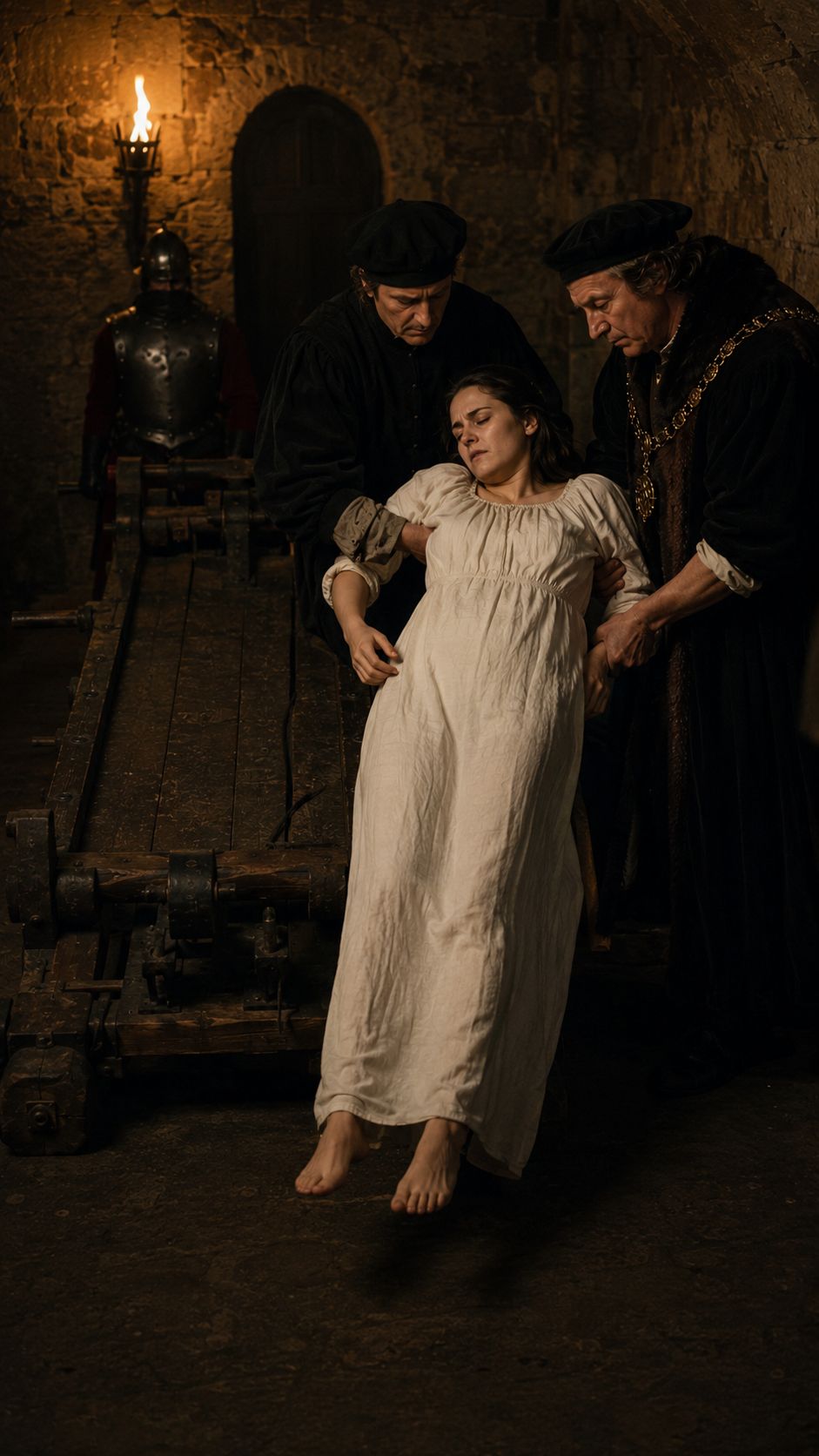
She was tortured on at least three occasions and did not confess. The torture left her right hand useless, and she wrote a declaration of her innocence with her left. Her brother took the case to the Reichskammergericht, the imperial chamber court, which in April 1627 ordered that she be released. Cologne’s judges ignored the order.

She was condemned in May 1627. On 19 May she was paraded through the city and strangled, and her body was burned. One account places the burning in a square outside the city walls. She was one of 38 people executed for witchcraft in Cologne, among them three men, a teenage boy and an eight-year-old girl.

The Legend

Popular retellings name a particular convent, a particular sister and an infestation of caterpillars as the start of the accusations. Those details are unconfirmed. The same retellings give the execution ground as Melaten, where the city cemetery now lies, and that location is also unconfirmed.

The Modern Relic

Her brother later tried to clear her name and was himself accused of witchcraft, arrested in 1631 and eventually released when the case collapsed. The matter then lay until Hartmut Hegeler, a Protestant minister and religion teacher, had his students research the case. They found that Katharina Henot had never been formally acquitted. Hegeler asked Cologne to act, and in 2012 the city council passed a resolution clearing her.

A statue of Henot stands on the tower of the old town hall, beside one of Friedrich Spee, the Jesuit who published a critique of witch-hunting in 1631.

Still there todayA statue of Katharina Henot stands on the tower of Cologne's old town hall (Rathaus), beside one of Friedrich Spee, the Jesuit who criticised the witch trials. The exact execution site is unconfirmed. See it on the Dark Atlas →
Sources
  • Wikipedia, 'Katharina Henot' — born around 1570 to the imperial postmaster Jakob Henot, running the post office with her brother Hartger after their father's death in November 1625, arrest in early 1627 on the order of Ferdinand of Bavaria, torture on at least three occasions without confession, the Reichskammergericht's April 1627 ruling for her release being ignored by Cologne's judges, condemnation in May 1627, the parade through Cologne, strangling and burning on 19 May 1627, the 2012 council rehabilitation, and the statue on the town hall tower beside Friedrich Spee
  • The Irish Times, 'Cologne council adopts resolution acquitting woman of being a witch in 1627' (14 February 2012) — the resolution clearing her, researchers finding that she had never been formally acquitted, Hartmut Hegeler's request after his students' discovery, arrest in January 1627, torture that cost her the use of her right hand, a plea of innocence written with her left, a nun's accusation, no evidence of any occult practice, the burning outside the city walls, 38 executed in Cologne including three men, a teenage boy and an eight-year-old girl, and the statue at the old town hall

Nearby on the Dark Atlas

  • How The Breaking Wheel Killed By Inches

    Executioners shattered the limbs in sequence with an iron bar, then left the broken body on the wheel for hours or days. One man is said to have lingered for nine days.

  • The Werewolf Trial Of Peter Stumpp

    A wealthy farmer confessed to becoming a wolf and killing his neighbours, and his execution became medieval theatre.

  • The Real D'Artagnan's Lost Grave

    The true musketeer behind the swashbuckling legend died on foreign soil, and his grave was lost for three and a half centuries.

  • The Iron Cages Above Münster

    When Münster's radical kingdom fell, its leaders' bodies were hoisted into iron cages that still hang from a church spire.

All stories near North Rhine-Westphalia →

← Back to the archive