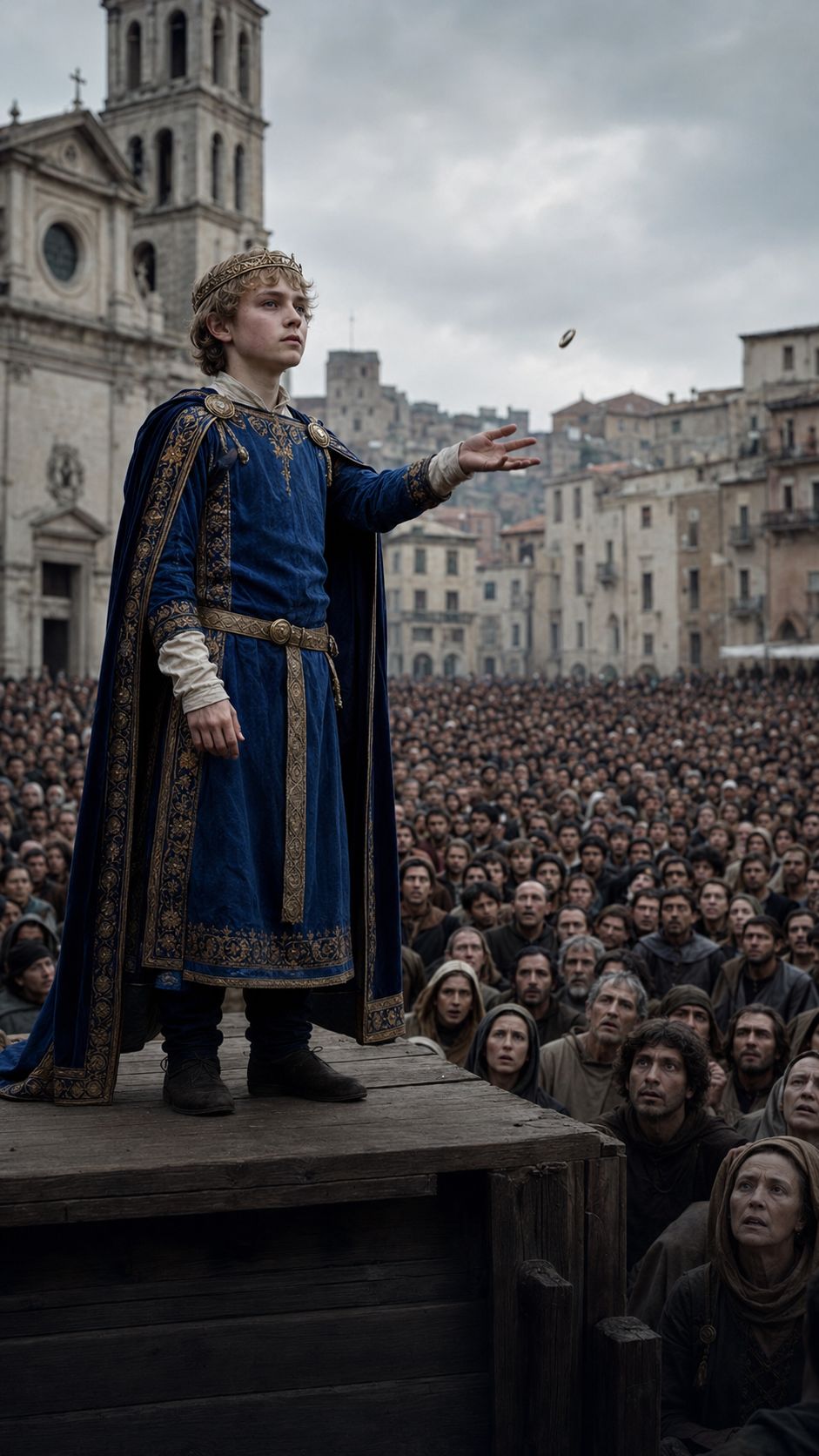
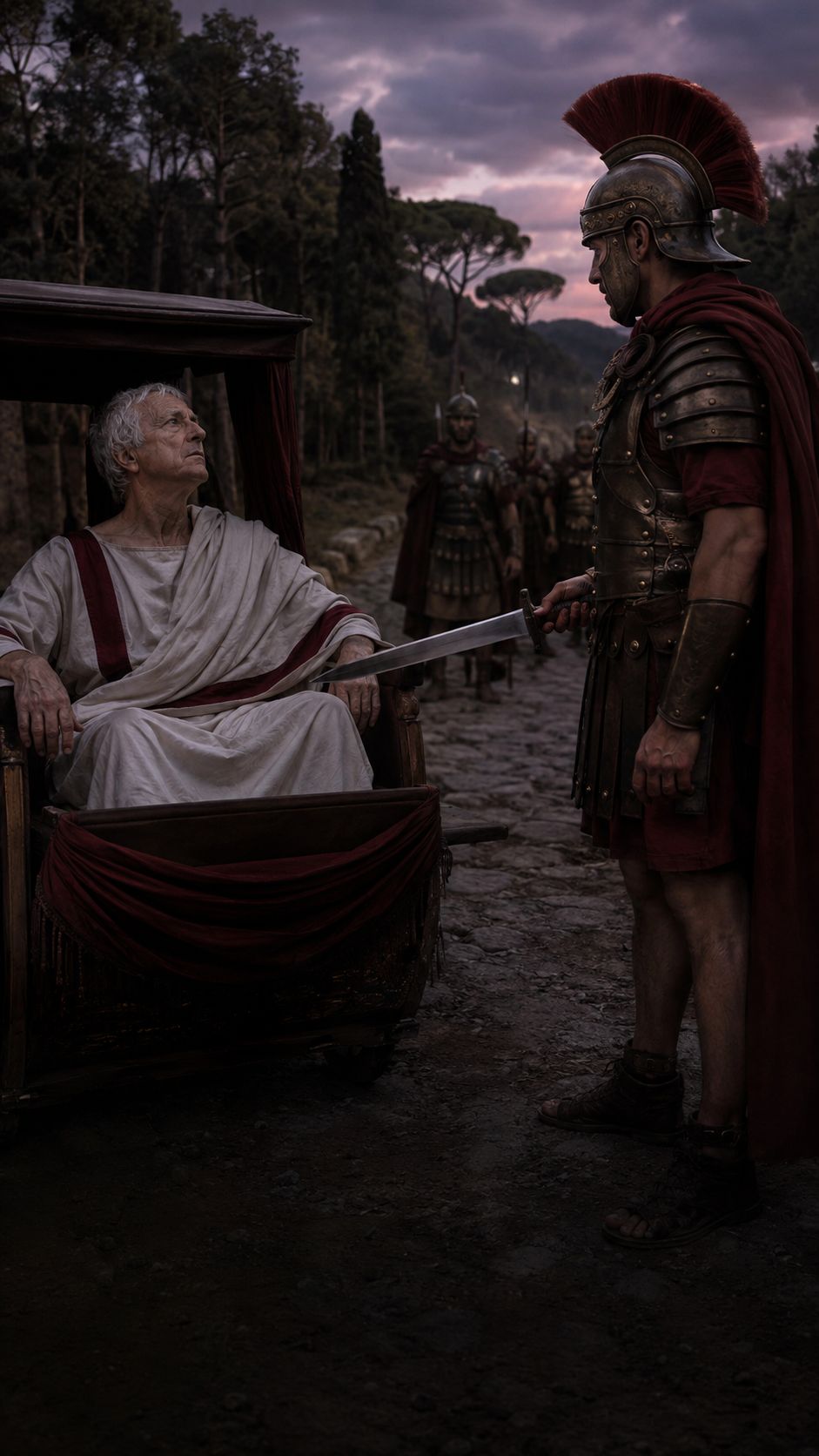
Galeazzo Maria Sforza was Duke of Milan for ten years and died at 32. He was a patron of the arts, and the chronicles also call him a tyrant and a womaniser. Some of the worst stories about him rest on popular retellings and not on documents, but enough people believed them that on St Stephen’s Day, 1476, three men from his own court went to church with daggers under their clothes.
The Horror
The three were Giovanni Andrea Lampugnani, Carlo Visconti and Gerolamo Olgiati. Lampugnani had a grievance that is easy to follow. His brothers had leased land from a country abbey, the abbot died, his successor cancelled the lease and evicted them, and the family’s appeal to the duke went nowhere. Visconti is said to have had a more intimate quarrel, tied to the stories of the duke’s treatment of noblewomen of his family, but that rests on tradition (see below). Olgiati, the youngest, had no known grudge at all. He is described as a republican idealist, and he later said his ideas came from the humanist teacher Cola Montano. That claim is a single, weakly sourced one. The plot may have begun as early as 1474.
On December 26, 1476, the feast of Saint Stephen, patron of the church of Santo Stefano Maggiore, the duke went there to hear Mass. The three conspirators had gone ahead, wearing hidden armour, to pray for the saint’s protection. One local account says the duke had first received the ambassadors of Ferrara and Mantua. Lampugnani waited in the nave. When the duke came in, he knelt as if to present a petition, then rose and stabbed him in the groin and chest. Visconti, Olgiati and Lampugnani’s servant, Franzone, joined in. The duke died almost at once.
Then it went wrong for them. The church was thrown into panic. Lampugnani, trying to escape through the crowd on the women’s side, became tangled in the cloth and was killed. The sources disagree on who killed him. Wikipedia says a guard struck him down. His body was dragged through the streets, hung upside down outside his house, and the next day cut down, beheaded and its right hand burned. His head went on the bell tower with the others.
Franzone was caught the next day and named the rest. Visconti, sheltered for a time by a relative, was taken. Olgiati was turned away by those he asked for shelter and was arrested on December 30. One account says his own father denounced him. On January 2, 1477, Olgiati, Visconti and Franzone were executed in public. The bodies were torn open from groin to neck and hung on the city gates, and the heads were set on lances on the bell tower. Accounts speak of torture before the executions, though the sources consulted give no detail.
The Last Words
The detail that made Olgiati famous is what he is supposed to have said. Burckhardt gives it in English as “Courage, Gerolamo! you will long be remembered; death is bitter but glory is eternal.” The Latin is usually given as “Mors acerba, fama perpetua, stabit vetus memoria facti,” which Wikipedia’s Sforza article places during his torture, while the Olgiati article places it at the execution. Neither names a contemporary witness, and the Olgiati article gives no Latin at all. Treat it as reported tradition, and as a line that fits the classical tyrannicide story Olgiati wanted for himself.
Two other stories belong in the same bin. The tale that the duke seized noblewomen from the Visconti and Olgiati households and forced them into prostitution is presented in the local account as something that is told, not as fact. The same source says the duke’s body was secretly buried between two columns of the Duomo, again as a thing that is said. It also mentions a skull in Sant’Andrea in Melzo that might be his, but offers no firm identification. A popular retelling adds that the duke felt dread that morning and nearly stayed away. No source consulted supports it, so it is legend at best.
The Modern Relic
The Basilica di Santo Stefano Maggiore still stands in Piazza Santo Stefano, close to Milan’s cathedral. The church has a long history. It was first built around 417, rebuilt after a fire in the Romanesque style in 1075, damaged by a collapse in 1642, and given a new bell tower by Gerolamo Quadrio in the late seventeenth century. So the building where the duke died is not the one you can enter today, though it is on the same site. Caravaggio was baptised there in 1571.
For the family itself, go to the Castello Sforzesco, the Sforza fortress, now a museum complex.